Following the sad passing of former Wolves striker Hugh Curran last week, author and historian Clive Corbett reflects on the Scotland international's time in gold and black.
***
Another day and, sadly, another passing of a Wolves great of the late 1960s and early 1970s.
It is appropriate that Hughie Curran was my choice, as well as that of David Harrison, as the most underrated forward in last season’s programme series. Dave also reminded us of the chant that fans invented for Hughie, to the title tune of the 1964 TV series, Flipper: ‘They call him Hughie, Hughie, faster than lightning. No one you see is faster than he. They call him …’
I must confess that although he was no slouch, the attributes that I associate most with Hughie were an eye for goal, bravery and terrific heading ability. Although not the tallest of strikers, he had the knack of seemingly being able to hang in the air and outjump taller defenders.
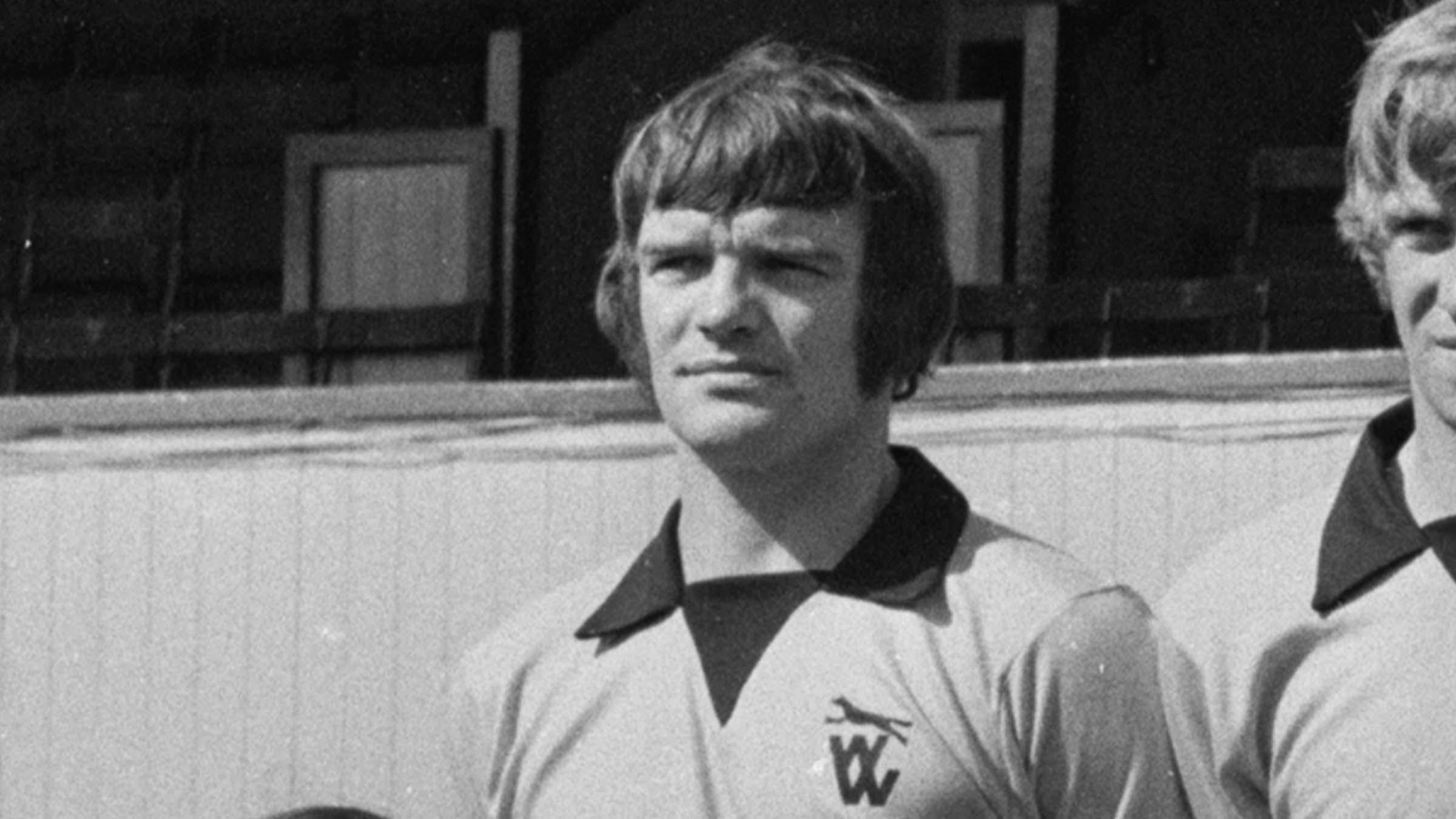
Curran joined Wolves from Norwich City in January 1969, making his debut in the home game with Burnley on 1st February. Donning the number 10 shirt, Hughie scored against Manchester United and Tottenham on successive Saturdays and in all notched four in ten before the season ended with Wolves languishing in sixteenth place. He toured the USA with Kansas Wolves that summer and made appearances in skipper Mike Bailey’s diary for his stint as a traffic cop and his liking for bourbon.
The 1969/70 campaign saw Hughie stealing the hearts of the Wolves faithful, missing only five games and scoring 23 goals. No other player got into double figures in a season in which Curran established his place in Molineux folklore, but Wolves slipped away after a promising start. He scored twice in a game on six occasions, most memorably against Nottingham Forest at Molineux on 6 September in Peter Knowles’ last game when the Wanderers somehow surrendered a three-goal lead to draw 3-3.
Soon afterwards Hughie was included in Scotland’s party for the World Cup qualifier against Germany, only to be withdrawn 24 hours later, but he eventually made his international debut on 5th November in a 2-0 World Cup qualifying loss in Austria. This gave him a place in Wolves history, being the first man to win a Scotland cap whilst with the club. Hughie won five caps in total over an 18-month period, his only goal coming against England in a 3-1 defeat at Wembley in May 1971.
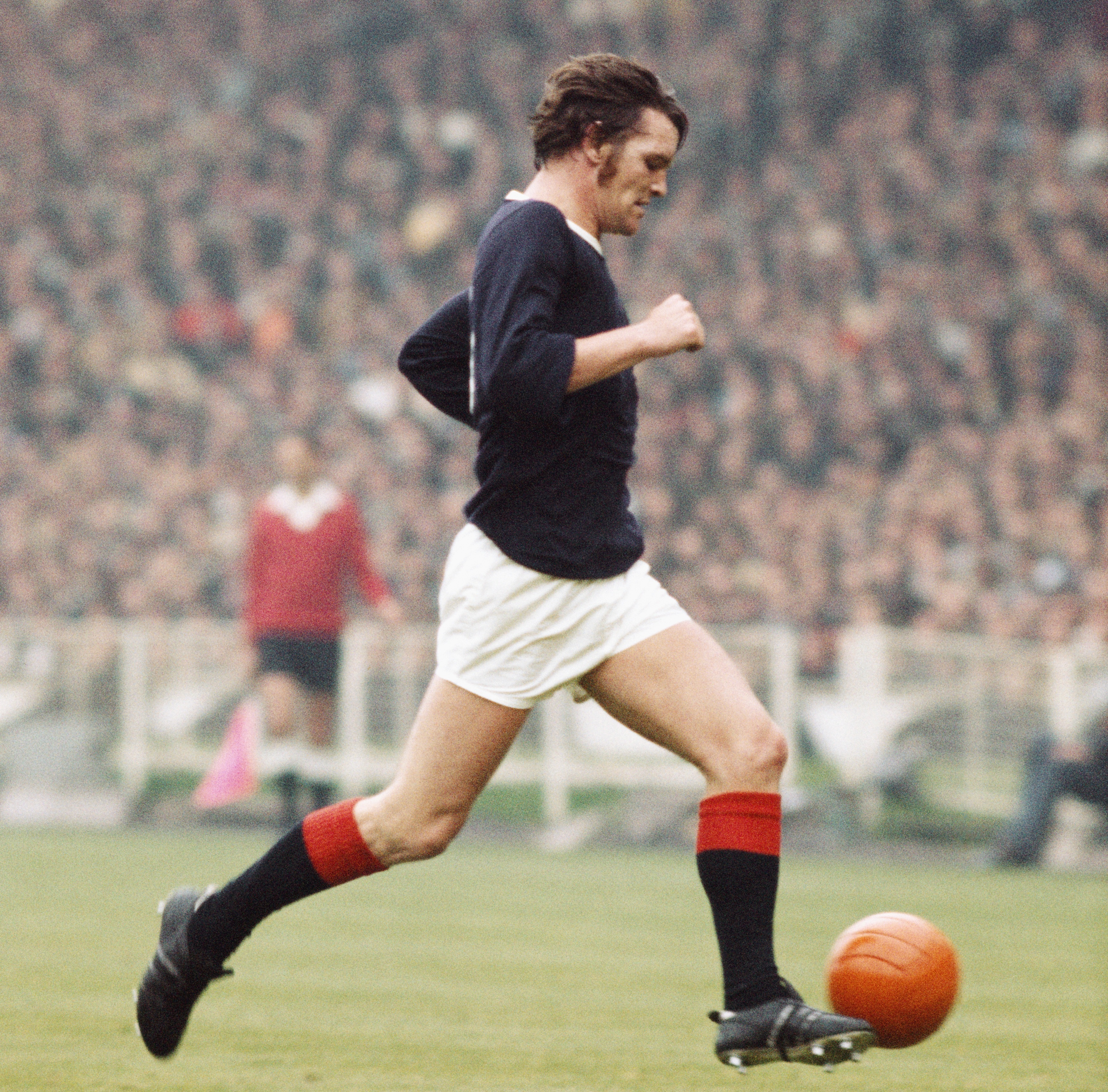
According to Wikipedia, Curran scored the first goal in an English league match to be broadcast live in Norway, Denmark and Sweden, when he netted the only goal of the game against Sunderland on 29th November 1969. In addition to the Forest game, other Curran doubles came in a tempestuous 3-2 home defeat to eventual champions Everton and another 3-3 draw, this time at The Hawthorns, on the occasion of a first start for John Richards.
Two Curran goals that campaign stand out for me, both away from Molineux, the first a towering header at Tottenham as he outjumped Mike England, the second when he ignored freezing conditions to help a Jim McCalliog header over Gordon Banks’ goal line to earn a point at Stoke.
After a dismal opening to the 1970/71 season for Wolves, three straight defeats, it was Hughie who scored his third goal in four to earn a 1-0 win at Coventry’s Highfield Road. On this occasion a left footed strike from Hughie secured a first win of the season. He had begun the move with a flick on to Dave Wagstaffe who flew down the wing and centred. Bobby Gould chested it into Curran’s path and the Scottish international did the rest with a left-footed strike. At the end of the week Curran scored again with what McGarry called “a hell of a goal” to put Wolves one up at the City Ground, although Forest ran out 4-1 winners.
On the 20th March, Hughie scored twice as Wolves overcame their hosts 4-2 at The Hawthorns in the 100th game between the Black Country rivals. This was one of three doubles netted that term.
A fortnight later, Curran scored his only Wolves hat-trick when Nottingham Forest visited Molineux on 3rd April. He opened the scoring on 38 minutes when he leaped high to jab the ball home with his right foot when Jim Barron failed to collect a Derek Parkin free-kick. The Sports Argus said it was “something akin to a ballet dancer’s high kick.”
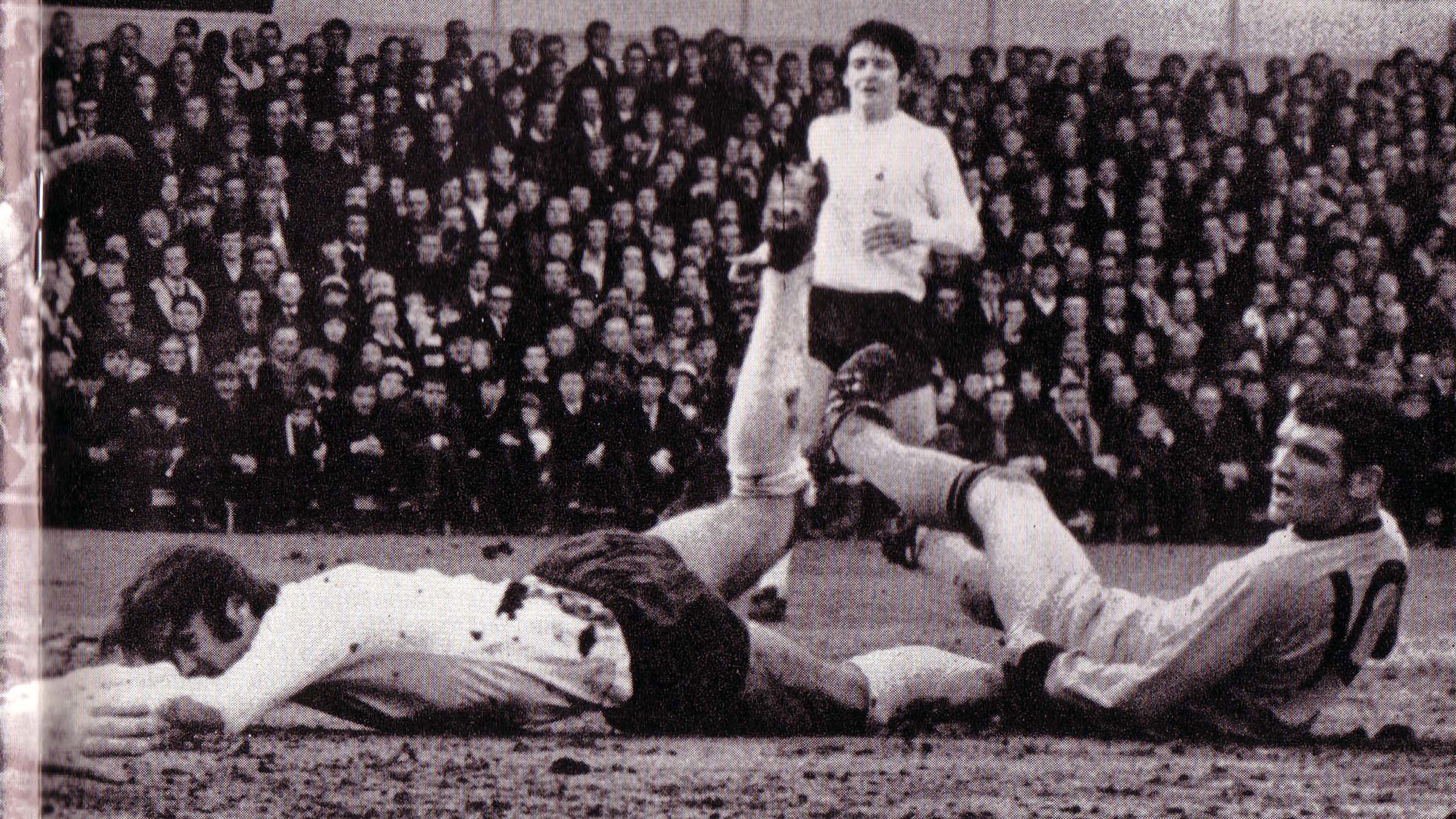
He scored again on 67 minutes. Bobby Gould failed to turn in a Jimmy McCalliog cross but the ball ran free to Hughie who drove it home. His hat-trick goal, ten minutes from time, was a header which saw the ball hit one post and then the other before rebounding into the net. Express & Star man Phil Morgan was impressed with the Scot’s display: “Not only did he graft – it was reminiscent of his more eager days soon after he arrived – but he impelled all around him to do so too.”
Wolves finished the season in fourth place, their best since 1960/61.
They also won the British Isles, or Texaco, Cup and Hughie scored four times in the run, including a brace in the first leg of the final on the 14th April as Wolves visited Tynecastle and left with a 3-1 win and an iron grip on the trophy. The silverware was duly secured despite a 1-0 loss in the return at Molineux in which Hughie did not appear. During that season four players hit ten or more goals; Jim McCalliog 10, Derek Dougan 13, Hugh Curran 20, and Bobby Gould 23, and qualification for the UEFA Cup guaranteed Wolves a first European adventure in over a decade.
In the following season, sadly, and somewhat inexplicably, Hughie’s Molineux fortunes slipped away as he did not appear at all until 9th October, and only then as a substitute in a 4-2 win over Southampton. In the league he had just ten outings, five from the bench, and featured twice in Wolves’ UEFA Cup run.
The first was a starting place in the bizarre 4-0 home defeat of FC Den Haag on 3rd November, the second as a substitute for Dougan in the second leg of the final at White Hart Lane. Near the end of March 1972, Hugh was reportedly due to move to Huddersfield, but was sent off and injured an ankle in a central league match against Burnley.
Although the Tottenham game on 17th May 1972 was Hughie’s last competitive game for Wolves, he featured heavily in the summer tour of North America and Australasia, playing in most of the 12 games. He scored against Aberdeen (in Vancouver), Auckland, and an Australian National XI (in Sydney), a game in which he was later sent off.
But when the real action began, there was no place for Curran and in September he was transferred to Second Division Oxford United for £55,000. He scored on debut against Millwall on the same day (16th September) that Manchester United visited Molineux. He had two seasons with United, playing alongside former Wolves forward Derek Clarke, and was their top scorer in both. Three of his goals in his first season at the Manor Ground came in a 5-1 home win over Sunderland who had led 1-0 at half-time. He then joined Bolton and with 11 goals was their top league goalscorer in 1974/75. He had a further season back at Oxford in 1976/77 by which time he was well into his thirties.
The bald facts are that Hughie Curran scored 47 times for Wolves in 98 outings, but this masks the impact that he had on teammates and fans alike. In a relatively short spell at the club (around three-and-a-half years) he endeared himself as a great striker and a larger than life character. He never gave less than his all for the cause and often put his head where many feared putting their feet.
Some years ago, Hughie’s fellow players remembered him in interviews for my book, ‘Those were the days’.
The late Phil Parkes recalled a wicked sense of humour and other talents: “Hughie would get up and sing anywhere. On one trip he led John Ireland to the top of the steps that should have led to an aircraft. Knowing that no plane was there he reassured him, ‘Mr Chairman another one will be along in a minute!’”
John Richards rated Hughie very highly on the field: “Excellent, one of the most underrated strikers Wolves have ever had. He was great to play alongside, worked hard, was tough and probably the best header of the ball of anyone I’ve ever played with or against. Curran was not dissimilar to Andy Gray, but of course different to Dougan who had more finesse.”
Bobby Gould adds: “Hughie Curran was a great striker. He was a great header of the ball; he could cushion it down for you to feed off. I remember our runs on Cannock Chase. There were always two missing. Hughie and big Phil Parkes got lifts back with lorry drivers. Hughie was never a great athlete, but a wonderful target player.”
There was also a time when the Scottish striker disobeyed his manager’s instructions with unfortunate results. Frank Munro, who later in his career enjoyed a successful spell as manager of Melbourne Victoria, remembered Hughie ignoring Bill McGarry’s instructions on the Australian leg of the 1972 tour: “Hughie was told not to by McGarry, but still took out a car and wrecked it.” Steve Daley added: “Hughie took everything without permission!”
My condolences go to Hughie’s family and friends. He will always be a much admired player in Wolves history and another hero of my youth to have left us.
RIP Hughie.


