‘A home like no other: The story of Molineux’ by club historian, Pete Crump
Molineux is an iconic name for an iconic stadium, and a venue which has been synonymous with Wolves for more than 135 years.
A ground steeped in history, and one of the oldest purpose-built football stadiums in the world, Molineux has played host to incredible, unforgettable moments involving the Old Gold stretching all the way back to the 19th century.
Home to generations of Wolves supporters, Molineux has witnessed the club’s greatest triumphs and most dramatic nights, and its distinctive character makes it one of the most unique stadiums in the history of the game, and as we celebrate our 150th anniversary, let’s take a look back over what makes Molineux so special.
The beginnings
Before Molineux became one of English football’s most recognisable grounds, the site was very different,
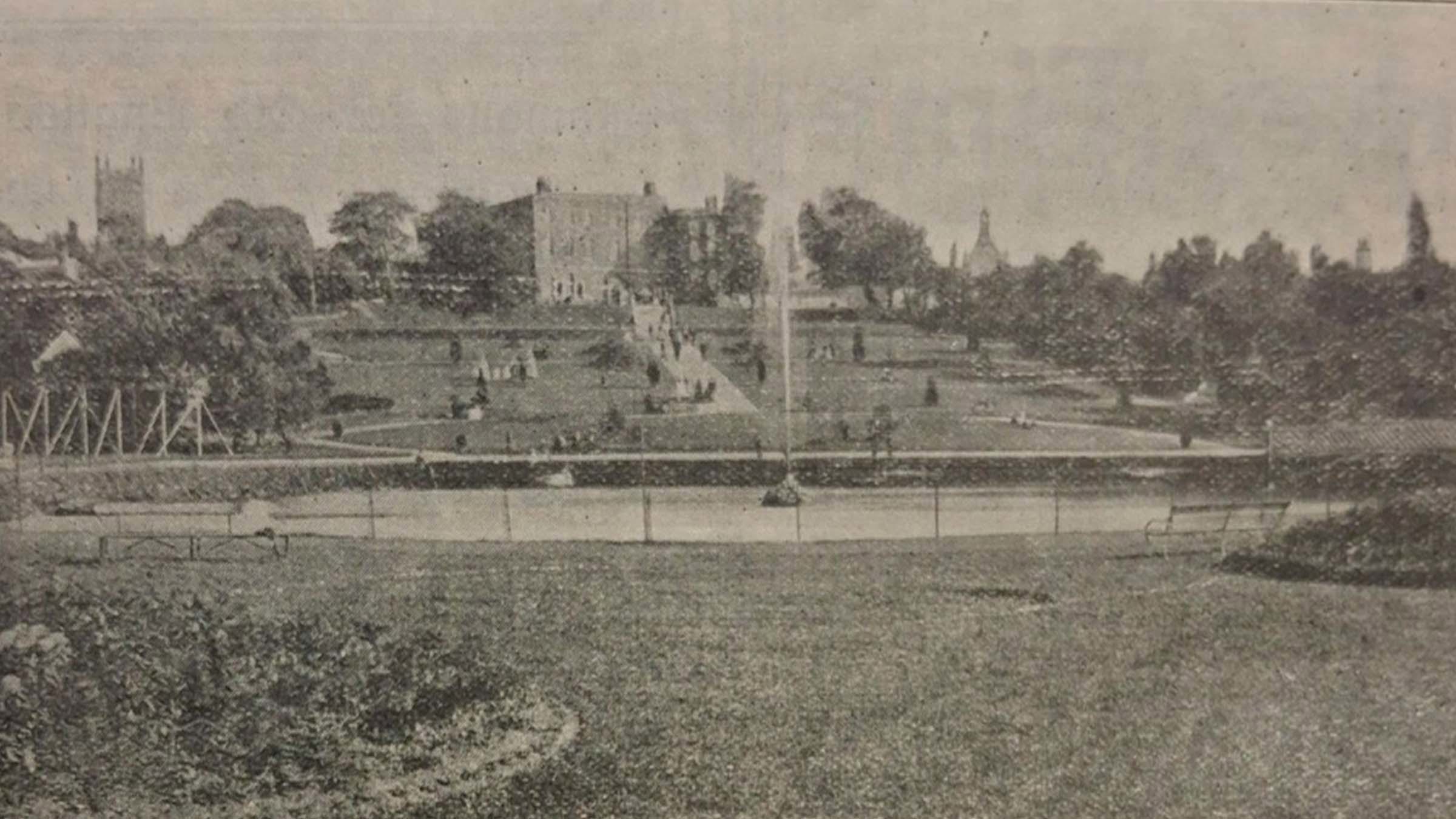
The land was originally the front garden of Molineux House and was home to the Molineux Pleasure Grounds. At one stage there was an ornamental lake, while a cycle track also occupied part of the site. Cycling was particularly popular in Wolverhampton, which was home to a number of bicycle manufacturers, and races of an extremely high standard were staged here. Other sports were also played on the site, including boxing, cricket, croquet, quoits, athletics and football, alongside music concerts and skating.
The Pleasure Grounds were essentially a place where members of the public paid to enter and enjoy the attractions, at a time when Wolverhampton did not yet have the public parks that would later become familiar landmarks.
The name ‘Molineux’
The history behind the name is complicated. Some historians believe the Molineux family were Huguenot refugees, while others have traced the family in England as far back as 1066 and the Battle of Hastings. The family had links to several parts of England, including Lancashire and Nottinghamshire, as well as the Willenhall area from around 1632 and Wolverhampton from around 1690. The later and their roots being as far back as 1066 we believe is the most accurate account.
By 1720, Molineux House had been built by John Rotton. In 1743, Rotton died owing John Molineux around £700. As the debt could not be repaid, the house passed to John Molineux. During this period, part of the building was demolished and altered into the style of house that would later be recognisable.
The property subsequently passed through several generations of the Molineux family. In 1754 it passed to Benjamin Molineux, before his son George Molineux took ownership in 1772. Charles Henry Molineux acquired it in 1820, followed by John Edmundson Molineux in 1848 and Charles Edward Molineux in 1851.
In 1856, the house and gardens were put up for sale. Oliver Edward McGregor purchased the property in 1860 as for four years they simply could not sell it, and it was McGregor who developed the site further, including building the ornamental lake that featured in famous artistic impressions of the grounds.
From 1862 to 1889, the site hosted a remarkable range of activities. There was a world-record hot-air-balloon ascent, industrial and arts exhibitions and, from 1870, bicycle racing and a variety of other sports. In 1871, Molineux House itself became a hotel.
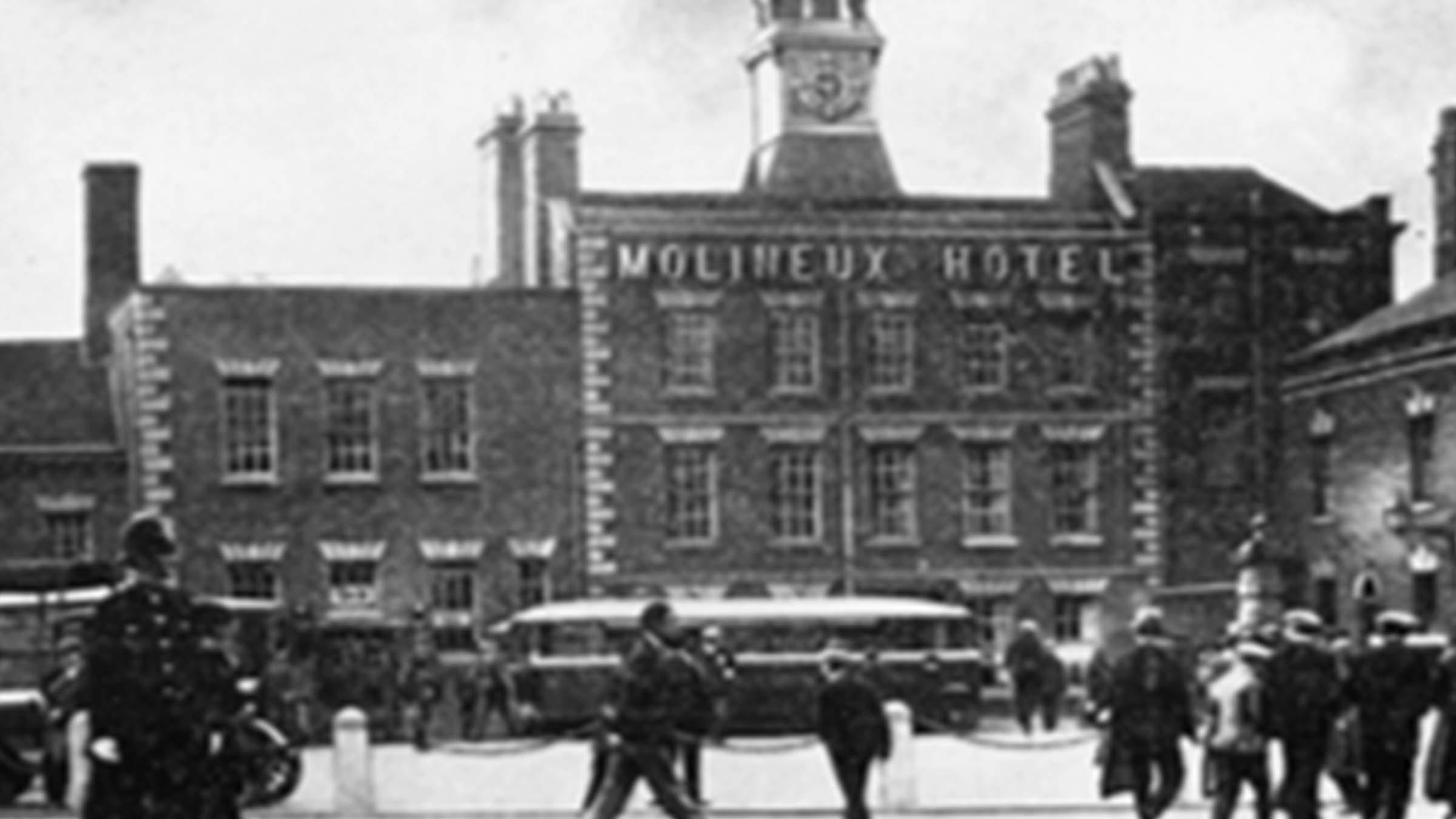
In 1884, the house was put on the market and it was sold to Edwin Steer but he sadly died only two years into ownership. It then was then owned by J.E Gittoes a local builder but he had sold the house by 1887 and it was purchased by a local publican called Joseph Devy. It was uncertain at the time whether Devy had purchased the house for him self or on behalf of Northampton Brewery as they owned it by 1889.
During the 1880s, Stafford Road Great Western Railway Works, then one of Wolverhampton’s leading football teams, played games during this era. There was at this time a fight for dominance in Wolverhampton between Stafford Road and Wolves.
While Wolves had already played at Molineux before making the ground their home, as on 13th January 1883, Wolves played Stafford Road in a friendly and won 5-1 as the away side. On 6th March 1886, Wolves played Walsall Swifts in a Birmingham Cup semi-final at Molineux, losing 3-1 in what was a neutral fixture. Wolves returned on 3rd April 1886 for another friendly against Stafford Road, winning 5-1 again.
The next visit would be rather more significant.
1889: Wolves move to Molineux
By 1889 the site belonged to Northampton Breweries. One of the brewery’s aims was to attract a football club to the ground, and Wolves moved from their Dudley Road home for an annual rent of £50.
Many of the pleasure gardens were removed to make way for the football ground. At first there was only a small stand on the Waterloo Road side, while the players’ dressing rooms were located inside Molineux House. The central location of the ground was believed to have been one of the reasons Wolves agreed to the move.
On Monday 2nd September 1889 - almost 137 years to the day - Wolves played Aston Villa in a friendly. They won 1-0.
David Wykes, who was born in Walsall, scored the first Wolves goal at Molineux as official tenants. The ground was packed, with reports describing a very busy grandstand and supporters gathered around the rest of the pitch on the grass banks. The attendance was said to be around 4,000.
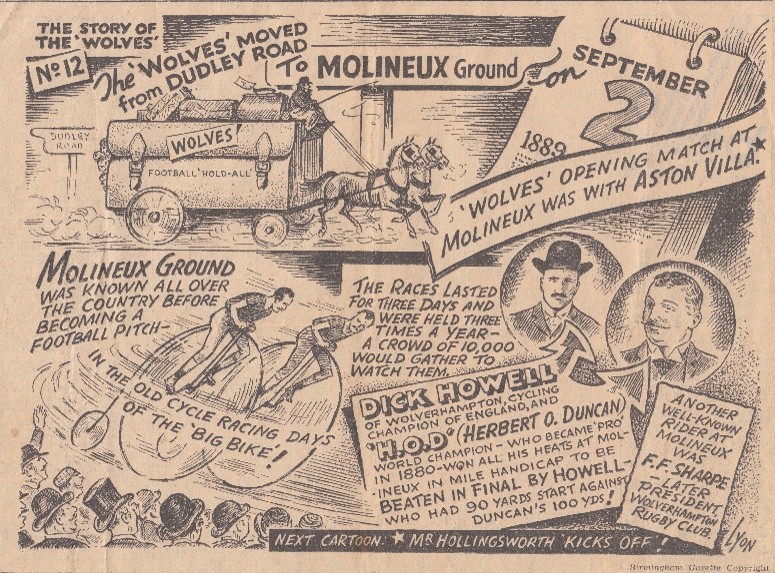
It was Wolves’ fourth ground move since the club’s formation 12 years previously, and, importantly, Molineux became the first new football ground used by a Football League club following the inaugural 1888/89 season.
Just five days later, on 7th September, Molineux hosted its first Football League fixture. Wolves defeated Notts County 2-0, with Arthur Worrall and David Wykes scoring, again in front of approximately 4,000 spectators.
Molineux was now firmly established as Wolves’ home.
Archibald Leitch’s rebuild
Molineux’s importance quickly extended beyond Wolves.
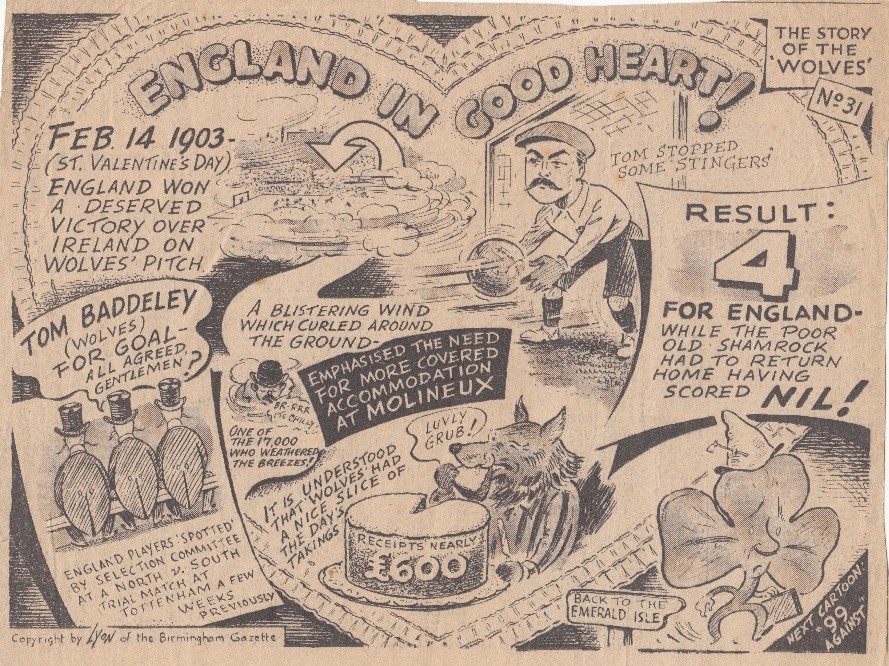
On 7th March 1891, the ground staged its first international match as England faced Ireland. England won 6-1, with Wolves players Billy Rose and Jack Brodie representing the home nation.
The Molineux Hotel was sold to Butlers Breweries of Wolverhampton in 1897, although Northampton Breweries retained the freehold of the football ground.
A major change came in 1923, when Wolves became a limited company for the first time. Wolverhampton Wanderers Football Club (1923) Ltd was formed, remaining in existence until 1982, and that same year, Wolves purchased the freehold of Molineux for £5,607.
A year later, architect Archibald Leitch was appointed to redesign and rebuild the ground. On Saturday 12th September 1925, Wolves played Portsmouth as the new main stand was opened.
The Waterloo Road Stand was the first major part of Leitch’s redevelopment, with Football League president J McKenna among the guests.
The Molineux Street side was still an open bank at this stage and it was the Waterloo Road Stand which would eventually became home to the dressing rooms, although they were not there immediately. By 1926, the dressing rooms had been moved into the stand, and pictures in the programmes show Jack Mitton leading Wolves out.
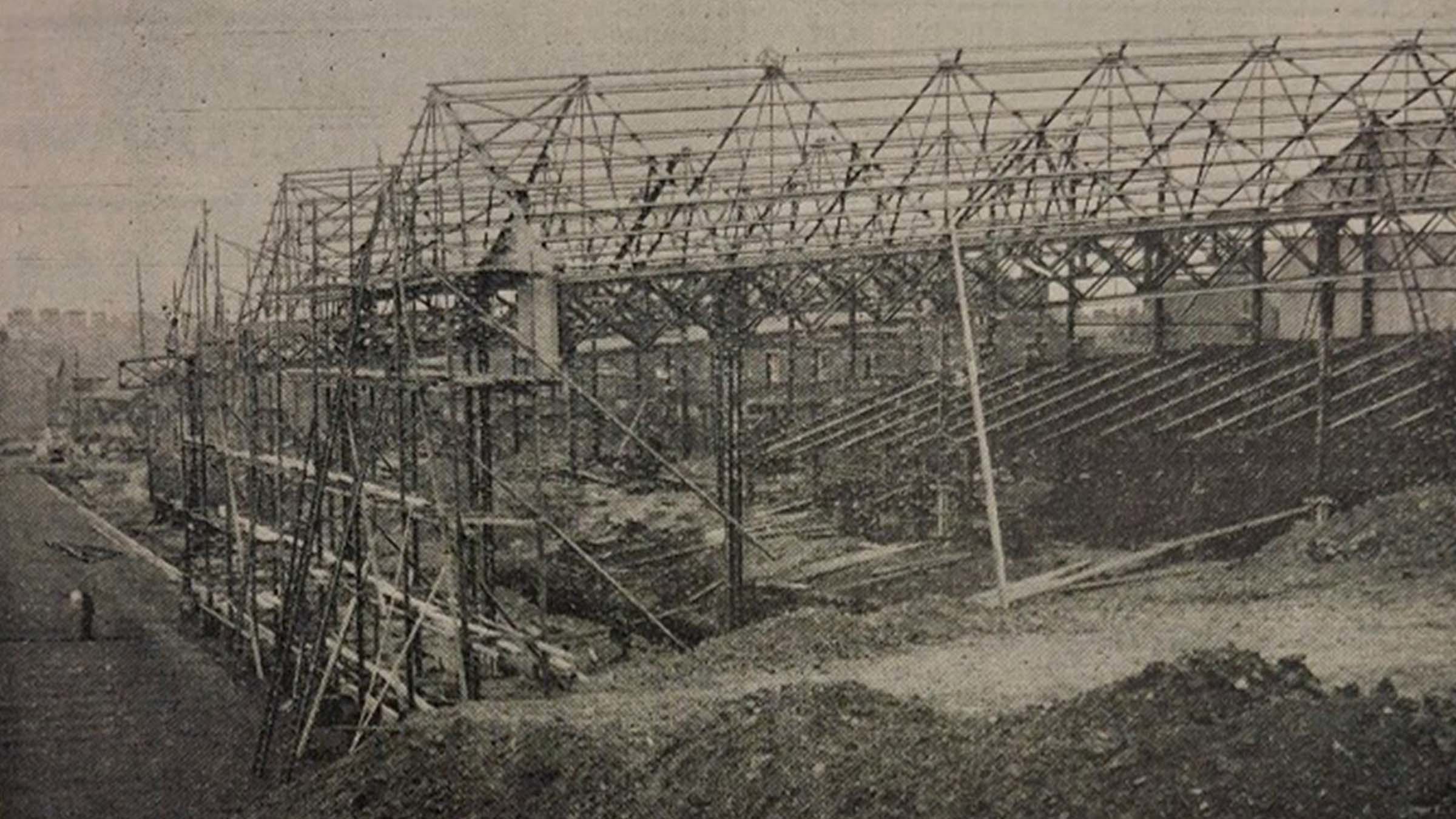
The grand entrance to the Waterloo Road Stand is believed to have been influenced by Aston Villa’s Trinity Road Stand, which had fully opened earlier in 1925 and was itself regarded as one of Leitch’s masterpieces.
The redevelopment did not begin entirely smoothly, however, as the roof from the previous Waterloo Road Stand was moved to the Molineux Street side, but it blew off in a storm later in 1925.
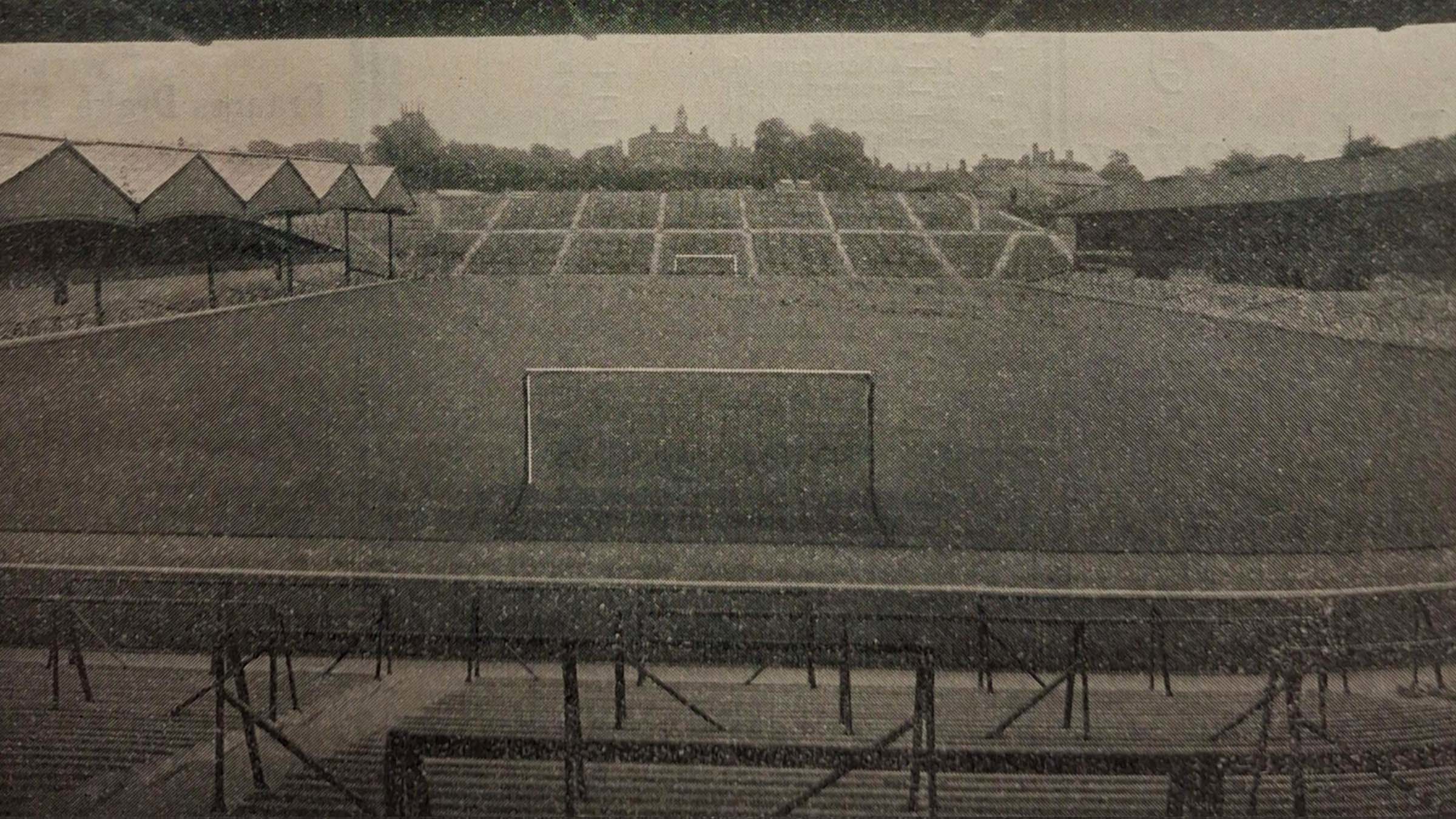
Further construction took place during 1931 and 1932 around the North Bank and Molineux Street, and by 1932/33 the stadium looked broadly similar to the Molineux familiar to generations of supporters, although the South Bank was still to be developed further.
In 1936, a roof was added to the back of the South Bank. This completed the main structural development of the period, and Molineux would remain broadly in that form until the late 1970s.
There was, however, one feature that became particularly famous. As development progressed, Molineux House was increasingly hidden from view, meaning its clock could no longer be seen by players or supporters inside the stadium. Contrary to the popular belief that the famous Molineux clock had been installed when the Molineux Street Stand was built in 1932, it actually appeared around 1936.
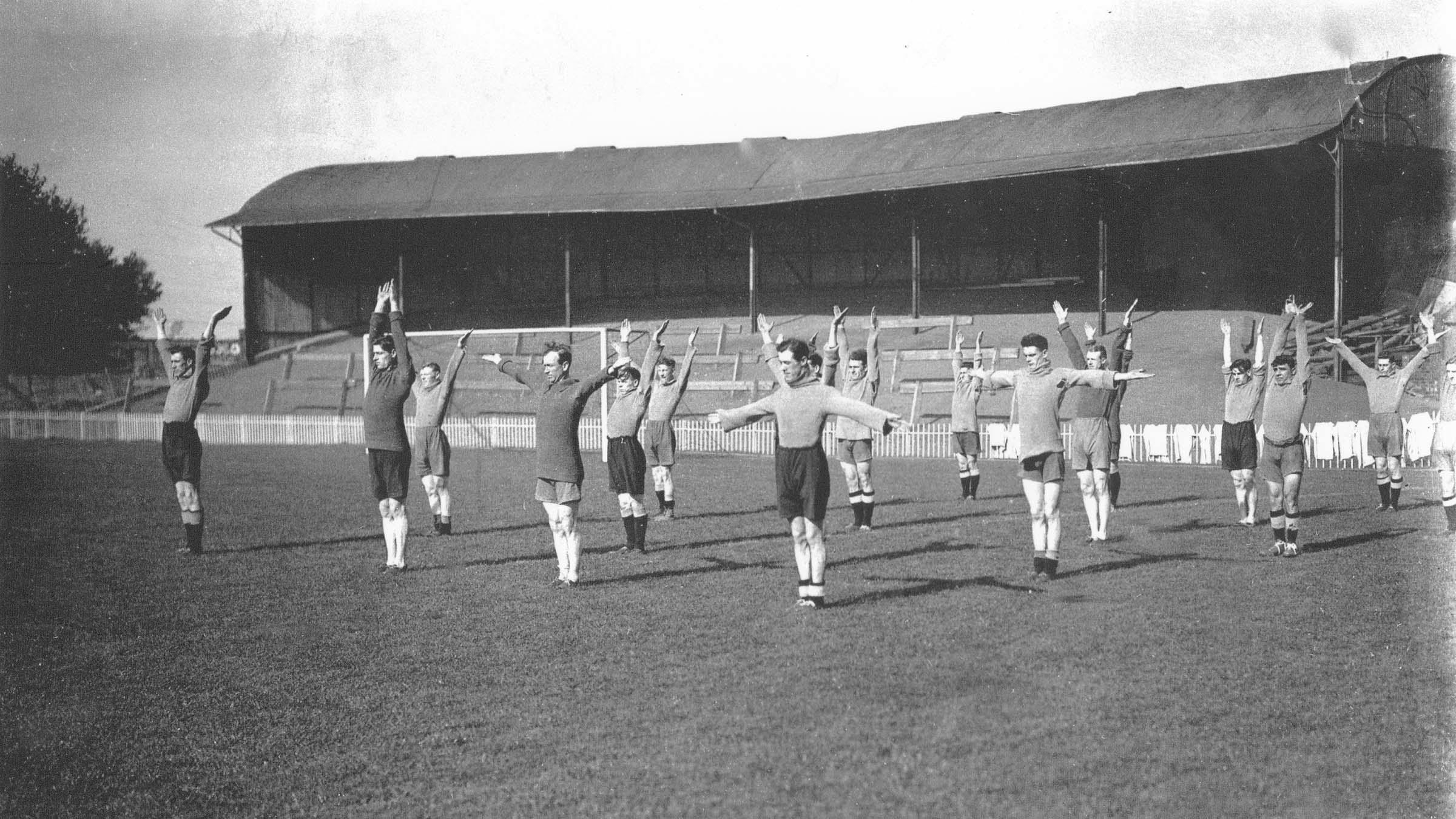
The clock was specially commissioned as a direct replica of the clock on Molineux House.
Leitch’s contribution to football grounds across Britain was enormous. Born in Glasgow in 1865 and a Rangers supporter, he worked on stadiums between 1899 and 1939 and helped create or develop many of the grounds that became synonymous with British football.
His work included Anfield, Highbury, Bramall Lane, Craven Cottage, Deepdale, Goodison Park, Hampden Park, Ibrox, Hillsborough, Old Trafford, Villa Park, White Hart Lane and many others.
The old Trinity Road Stand at Aston Villa was often regarded as the jewel in his crown. Much of Leitch’s work subsequently disappeared following changes to stadium safety after the Popplewell Inquiry and the Taylor Report, although important examples remain, including at Craven Cottage, Goodison Park, Rangers and until recently Tynecastle.
At Molineux, his influence remained an important part of the ground’s history.
Floodlights and the stadium of the future
Molineux entered the floodlit era in the summer of 1953, with the original floodlights made and installed by France Electrical Limited of Darlaston, with the lamps supplied by Hollophane.
Four years later, taller floodlights were installed. The original set were sold to Blackpool for £6,500 after Blackpool planned to play in a new floodlit league that ultimately did not go ahead. Blackpool later sold the lights to Grimsby Town for £1,000 in 1960, and they remained at Grimsby until 2019, with some of the original metalwork still surviving.
In July 1958, chairman James Baker announced ambitious plans for a complete overhaul of Molineux. His proposed “stadium of the future” was designed to cement Wolves’ position among the biggest clubs in the world.
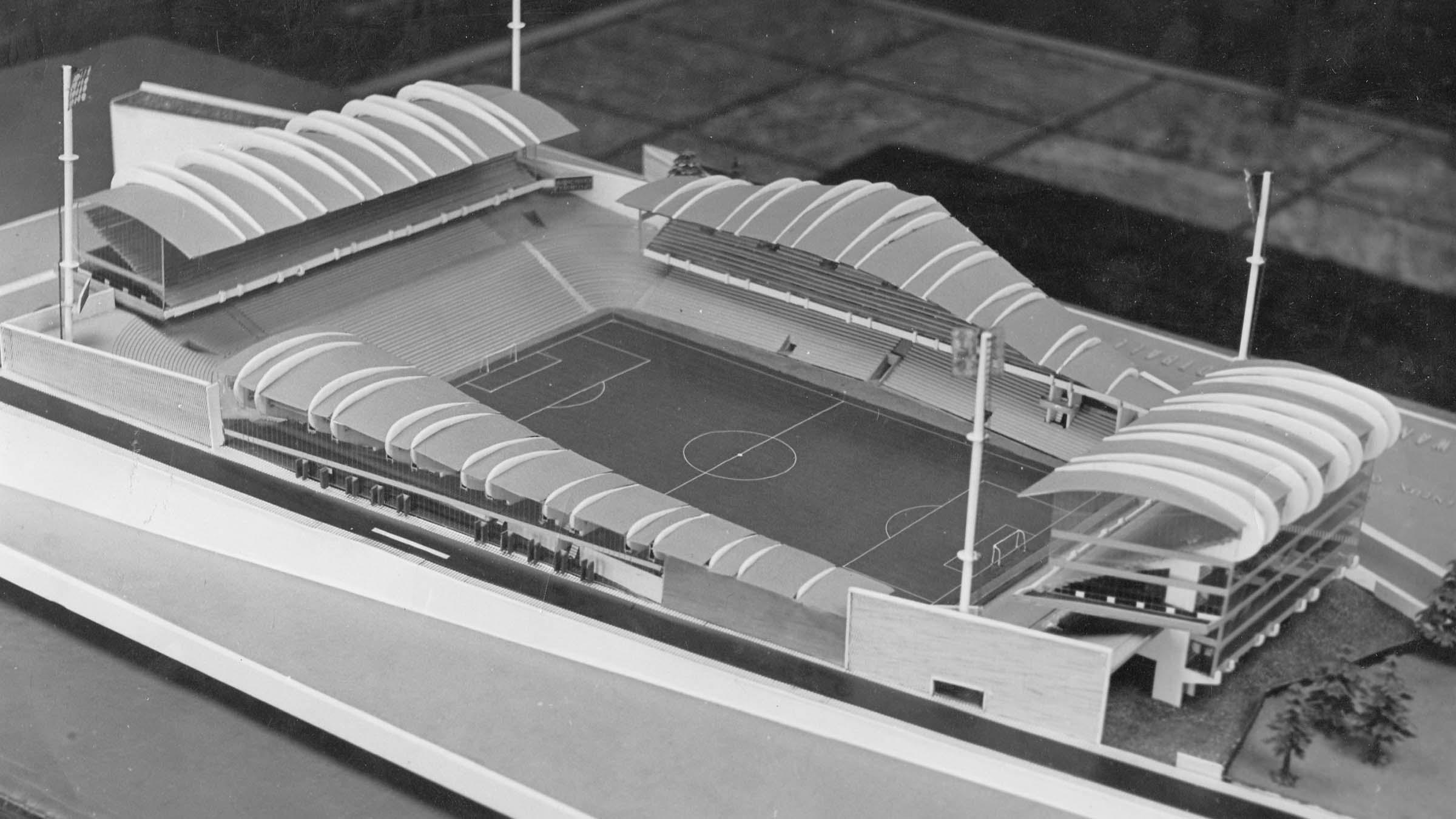
The projected cost was £500,000, with capacity increasing to more than 70,000, including 14,000 seats. The plans, however, never came to fruition because Wolves and the local council could not agree on the necessary planning permission.
A smaller but significant change arrived in 1960 when the Molineux Street Stand became all-seater. Around 2,000 seats were installed in the lower tier, taking the total number of seats to approximately 8,000.
The change reduced overall capacity from 55,500 to 53,000 but made the Molineux Street Stand the first fully seated stand at the ground.
Photographs demonstrate the change clearly. During Wolves’ match against West Ham on 11th April 1960, supporters could still be seen standing in the lower section. When the same opponents returned on 20th August, the seats had been installed.
There was further discussion about developing Molineux in 1961, particularly around extending the North Bank. The falling attendances being experienced across football, however, made major investment more difficult. One proposal involved extending the terrace back onto the car park and constructing a stand and roof above it.
The idea was influenced by developments at grounds including Filbert Street, Goodison Park and White Hart Lane.
In the end, major development largely stalled throughout the 1960s and into the mid-1970s.
During the late 1960s, the Molineux Social Club was also established. It contained a bar, gym and indoor football facility and was used as a social area as well as occasionally for training. The building remained until the early 2000s when it was demolished.
Meanwhile, in 1976, Wolves purchased Molineux House and, sadly, applied to demolish it. Fortunately, that never happened.
The building closed as the Molineux Hotel in 1979 and subsequently fell into disrepair over the following quarter of a century. It also suffered a serious fire in 2004, but in 2005, work began to transform the building, with Wolverhampton City Council and English Heritage working together on the project. It reopened in 2009 as the Wolverhampton City Archives.
Safety act starts the modern era
The 1970s would bring a new era for football grounds and eventually force Molineux into another major redevelopment.
The Safety of Sports Grounds Act 1975 followed the Ibrox disaster of 2nd January 1971, when 66 supporters were crushed to death on an exit stairway and more than 200 others were injured.
Ibrox had already suffered another disaster in 1902, when 25 supporters died and more than 500 were injured after an old wooden stand collapsed during an international match. Wolves player Billy Beats was involved in that match, but the 1971 disaster would have a direct bearing on Molineux.
Football hooliganism had also been increasing since at least the mid-1960s and became a major concern during the 1970s and beyond.
Molineux was not immune. The terraces, particularly the South Bank, witnessed violence, while the South Bank was also the first point of arrival for many away supporters walking from Wolverhampton railway station or arriving by coach.
There was trouble involving Wolves at home and away, including against Chelsea, Manchester United and in local derbies.
In February 1978, segregation was introduced at Molineux. It was installed in anticipation of West Midlands derbies against West Bromwich Albion and Aston Villa, although both matches were postponed.
The first fixture to use the new segregation was the late Phil Parkes’ testimonial on 27th February 1978. The first league match was against Norwich City on 4th March, meaning Norwich supporters were the first visiting fans to occupy Molineux’s first dedicated away section.
The changes also began reducing the enormous capacity of the South Bank, which had been capable of holding around 30,000 people.
With safety at stadiums now becoming paramount to football clubs, Molineux had to undergo lots of renovation to adhere to new legislation, and during the coming weeks we’ll take a look at how the stadium has been vastly developed over the last 50 years to become the ground we all know and love today.
Wolves historian Pete Crump’s weekly articles reflecting on a range of topics from the club’s proud past will be available throughout the 150th anniversary season on wolves.co.uk.


