‘Molineux’s frontline heroes: The story of Wolves and the war’ by club historian, Pete Crump
During this time of year, the club joins the whole nation in commemorating those who gave their lives for their country in conflict.
Over the next few weeks as part of our tributes, we will reflect on how war affected football, the players and the communities which surrounded them and explore the story of Wolves during the two World Wars, the impact on the club and what became of the men who represented the Old Gold.
I would like to begin by thanking Wolves supporter and matchday volunteer Dale Boswell, whose 2020 dissertation examined the impact of the First World War on Wolverhampton Wanderers.
His findings have helped create a fuller picture of this fascinating, tragic and deeply poignant period offering valuable insight into the war’s impact on the club and those connected with it.
Football’s brave battalions
The first football battalion – ‘pals battalion’ – was formed in Edinburgh in 1914 – the 16th (Service) Battalion of the Royal Scots. This was also known as McCrae’s Battalion, after Colonel Sir George McCrae who had also been a Liberal MP in Edinburgh.
This battalion mainly consisted of professional and amateur sportspeople, including many footballers and football supporters as well as individuals from the worlds of rugby union, cricket, field hockey, golf, athletics, swimming and body building.
Heart of Midlothian contributed 16 players and about 500 supporters. They were joined by roughly 150 Hibernian supporters, players from Raith Rovers, Falkirk, Dunfermline Athletic, East Fife, Kilmarnock and St. Bernards, and one from England’s Glossop North End. Supporters were also urged to enlist.
During the war, the battalion suffered horrendously.
Heart of Midlothian lost seven first-team players (James Speedie, Tom Gracie, Duncan Currie, Harry Wattie, Ernest Ellis, James Boyd and John Allan), and eight were discharged from the army with severe injuries (Alfie Briggs, Paddy Crosnan, James Hazeldean, James Low, James Martin, Edward Mcquire, Bob Mercer and George Sinclair). Hearts also lost five ex-players (George Badenoch, Bill Cox, David Philip, Duck Harker and Bobby Atherton).
Hearts have a proud tradition of remembrance. In 2014, they marked the centenary of the 1914 team with a commemorative strip and one of football’s finest.
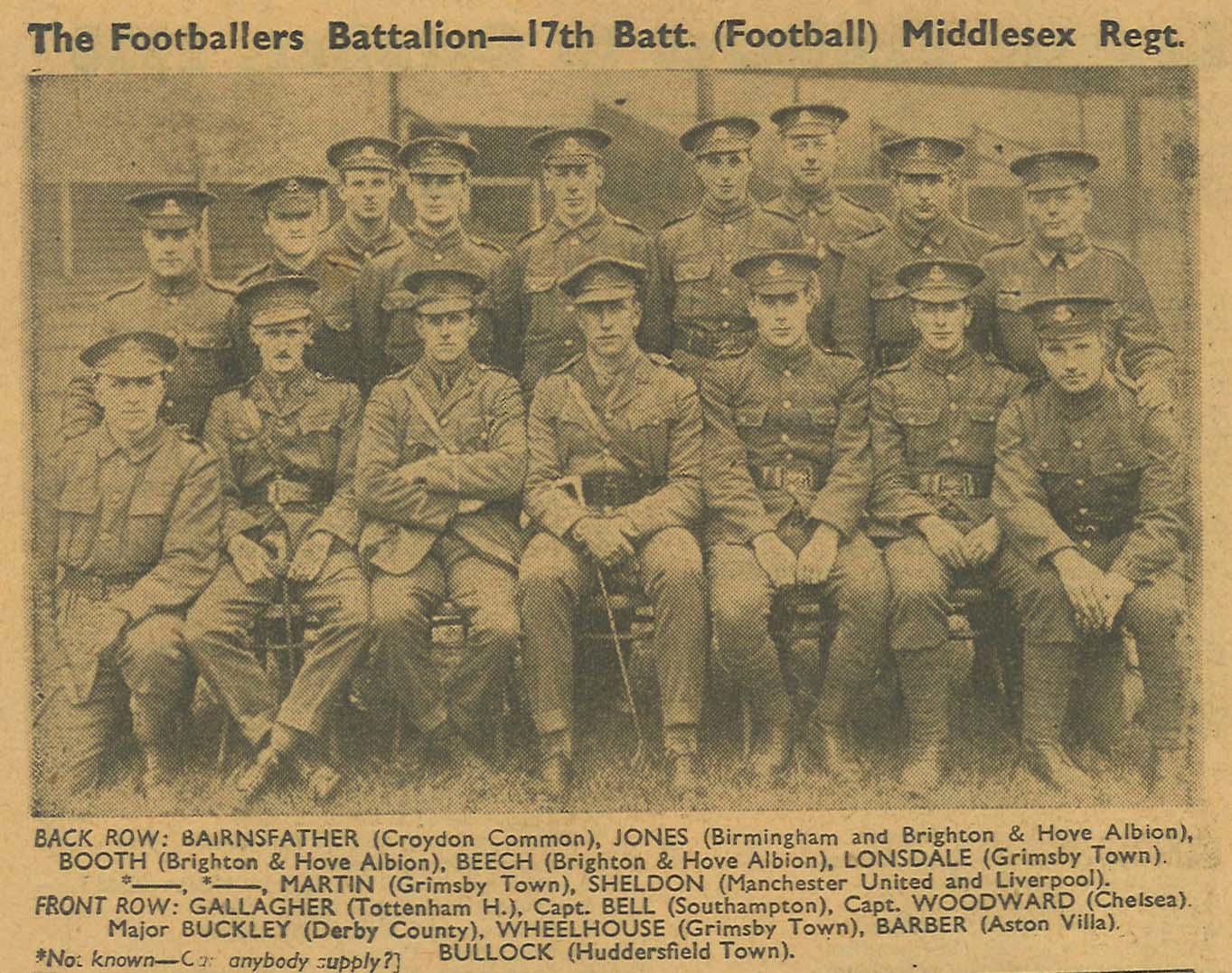
On 6th September 1914, author Sir Arthur Conan Doyle made a direct appeal for footballers to join the war effort. As a result, many players signed up, many to their local regiment, and on the 12th of December, the 17th (Service) Battalion of the Middlesex Regiment was formed by William Joynson Hicks. It soon became known as the Football Battalion as 35 players signed up on the first day and it was not long before the 600-man limit had been reached.
The Iron Major
The first player to join was a man who would later become a Wolves legend. At the time, he was an England international with Bradford City. His name was Franklin Charles Buckley, and thanks to his previous military experience, he was commissioned as a Lieutenant and later became a temporary Major.
Military service ran in Buckley’s blood. Before pursuing a career in football, he had already served in the army, eventually purchasing his discharge for a fee of £18 in 1903 so that he could focus on the professional game.
The Football Battalion was larger than McRae’s. By March 1915, 122 football players had signed up, and this included the complete Clapton Orient team, officials, referees and fans too. There were also a lot of supporters from Chelsea and QPR who wanted to serve alongside their heroes, Vivian Woodward and Evelyn Lintott.
However, the battalion suffered terribly on the Somme. Buckley himself suffered serious injuries when shrapnel punctured his lungs. Newcastle United player George Pyke was quoted as saying: “A stretcher party was passing the trench at the time. They asked if we had a passenger to go back. They took Major Buckley, but he seemed so badly hit, you would not think he would last out as far as the Casualty Clearing Station.”
The injury he sustained was what was known as a ‘blighty injury’, meaning he had to be sent home. Buckley survived, and though he never regained his fitness to play football again, bar one game for Norwich in 1919, he would use his skills for other things.
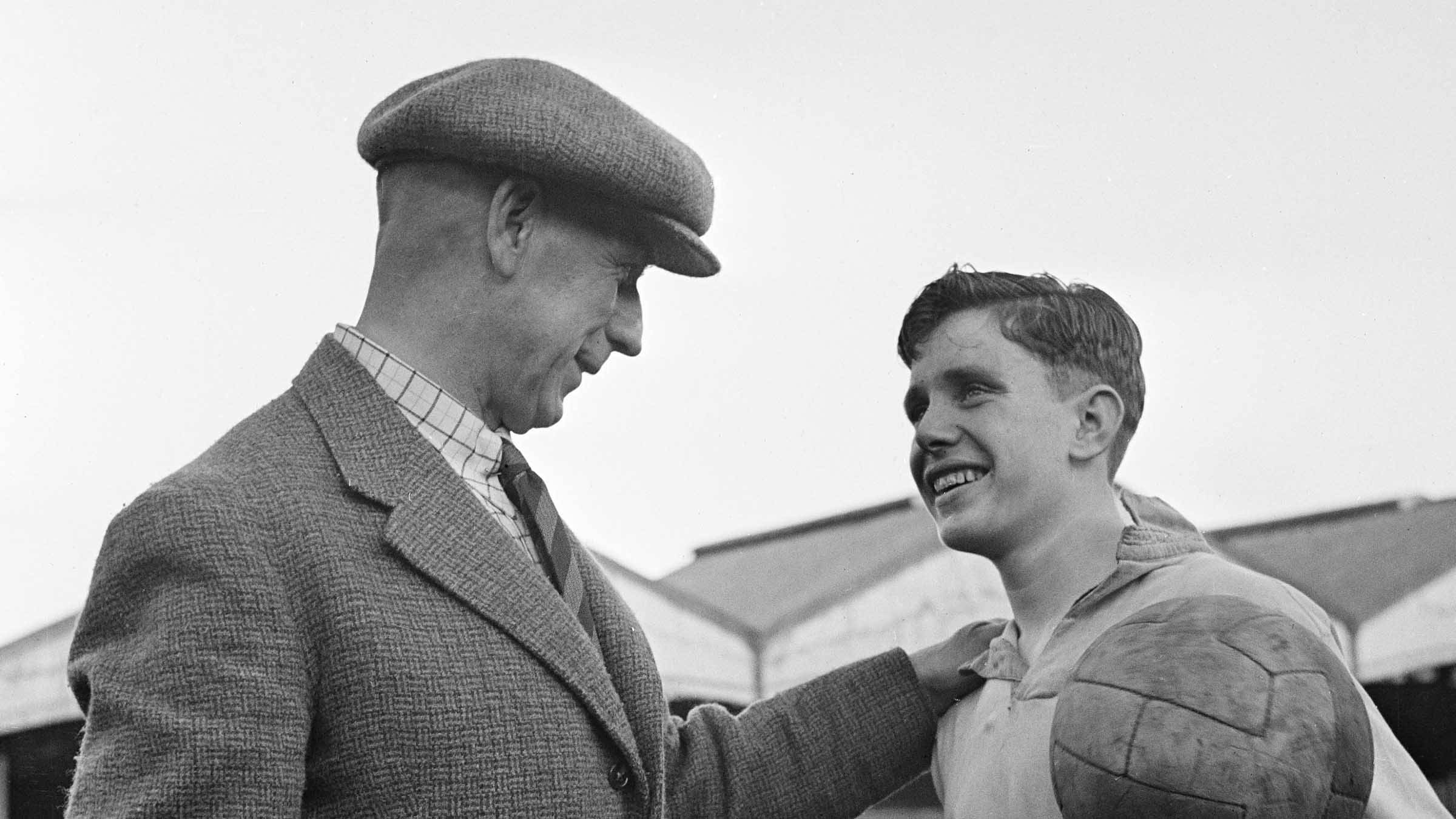
He returned to the Western Front in January 1917, and by 1935, 500 of the 600 men under his command had died, either during the war or later from their wounds and injuries.
The list of clubs that were represented in these Battalions of heroes included Clapton Orient, Bradford City, Croydon Common, South Farnborough, Chelsea, Northampton Town, Nottingham Forest, Chesterfield, Cardiff City, Reading, Plymouth Argyle, Fulham, Exeter City, Manchester City, Bristol Rovers, Manchester United, Stockport County, Southend United, Brighton & Hove Albion, Huddersfield Town, Norwich City, Queens Park Rangers, Coventry City, Arsenal, St Mirren, Newcastle United, Luton Town, Ton Pentre (Wales), Grimsby Town, Aston Villa, Millwall Athletic, Tottenham Hotspur, Crystal Palace, Leicester Fosse, Hurst (now Ashton United), Oldham Athletic, Port Vale, Stoke, Burnley, Gainsborough Trinity, The Wednesday, Shelbourne (Ireland), West Ham United, Watford, Hinkley Athletic, West Bromwich Albion, Birmingham, Liverpool, Wingate Albion and Notts County.
The second battalion also contained Private Percy Humphreys, who was the manager of FC Basel in Switzerland, and Lance Corporal Charles Bunyan Senior, who was the manager of Standard Liege in Belgium.
West Ham Pals
In December 1914, the mayor of West Ham applied to the War Office to form the 13th (Service) Battalion of the Essex Regiment, also known as West Ham Pals. Many of the men who joined were first-generation West Ham supporters and were recruited from army offices around the East End of London. By February 1915, there were 1,000 in this regiment.
West Ham Council rejected the battalion’s request to display two hammers on its caps. However, the men adopted the battle cry “Up the Hammers”. After completing their training, they left for France in December 1915 and fought at the Somme, Vimy Ridge and Cambrai.
Their courageous last stand at Cambrai received widespread newspaper coverage, and members of the regiment were awarded Military Crosses and Military Medals. Of the original 1,000 men, an estimated 250 were killed and another 250 seriously injured; those who survived endured the severe psychological effects of their experiences.
Wolves and the First World War
Although no then-Wolves players served in the Football Battalion at the time, the club still contributed to the war effort, and several former players served in other battalions.
Horace (Harry) Robotham
Harry Robotham was born in Heath Town. Prior to Wolves, he had played for Wolverhampton Post Office, Redshaw Albion, Ossett and Hunslet. Robotham was a wing-half and played for Wolves between 1901 and 1903, making six appearances during the 1901/02 season, and scoring one goal for Wolves on 18th January 1902 against Small Heath (now Birmingham City) at Molineux. After Wolves, Robotham played for Fulham, Brentford, Glossop, New Brompton and Wellington Town.
Robotham was in the 2nd Football Battalion of the Middlesex Regiment, was killed in action on 12th September 1916 during the subsidiary Battle of Flers-Courcelette. Sadly, his body was never recovered, and his name is on the Thiepval Memorial to the Missing in the Somme region of France.
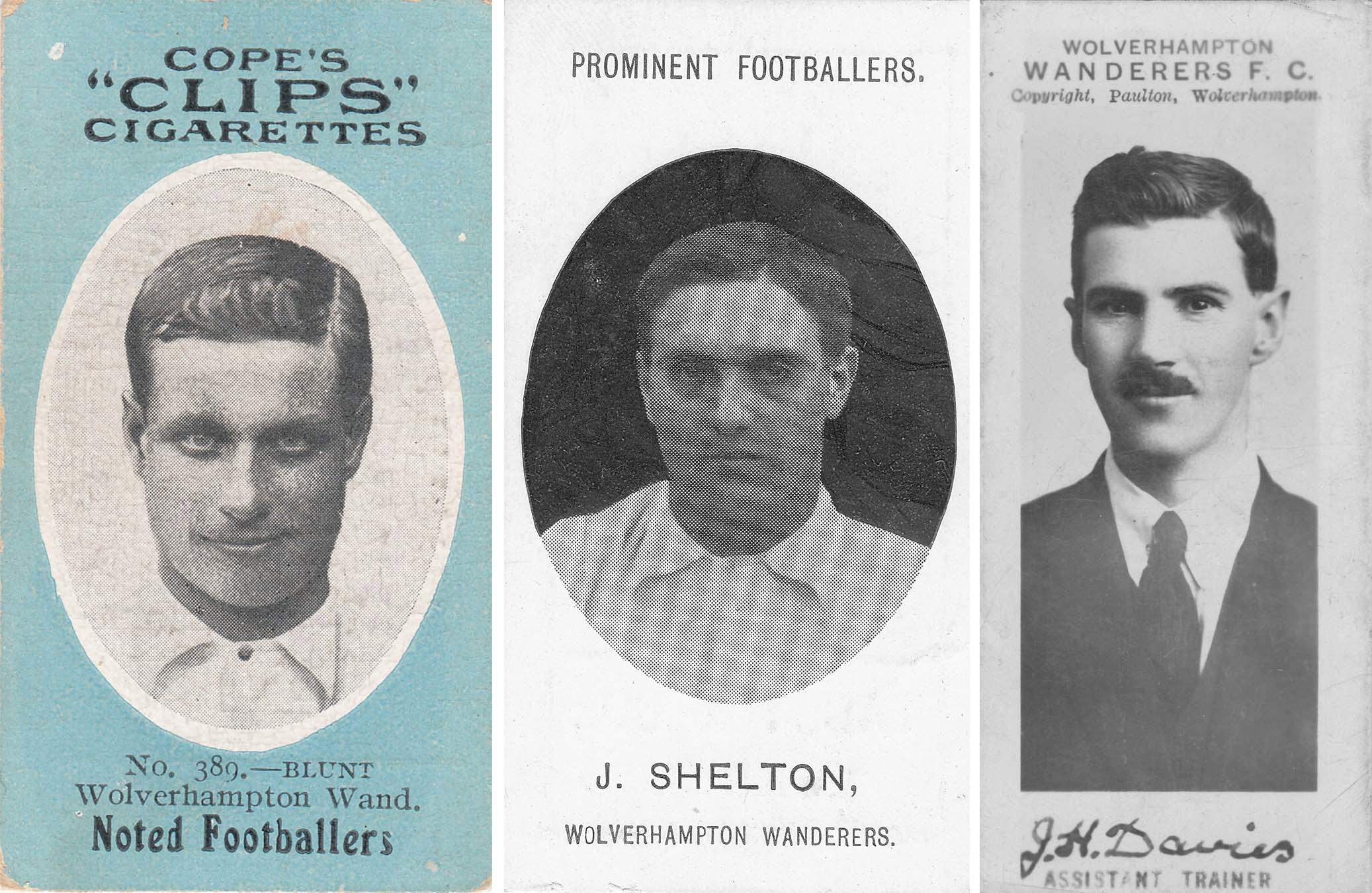
Walter Blunt
Walter Blunt played for Wolves’ reserve side and also for Stafford Rangers. He served in the 17th (Service) Battalion (1st Football). Blunt was killed on 28th July 1916 in Flanders.
(John) Jack Shelton
Wolverhampton-born right-half and inside-forward Jack Shelton also served. Prior to joining Wolves, where he scored 17 times during his 94 appearances between 1907 and 1911, Shelton had played for Willenhall Pickwick and Crompton Rovers. He was also part of Wolves’ winning 1908 FA Cup Final team. Sadly, Shelton was killed on 7th September 1918, near the Hindenburg Line on the Somme. We believe he was killed by a trench raid or shell fire in the days leading up to the Battle of Epehy.
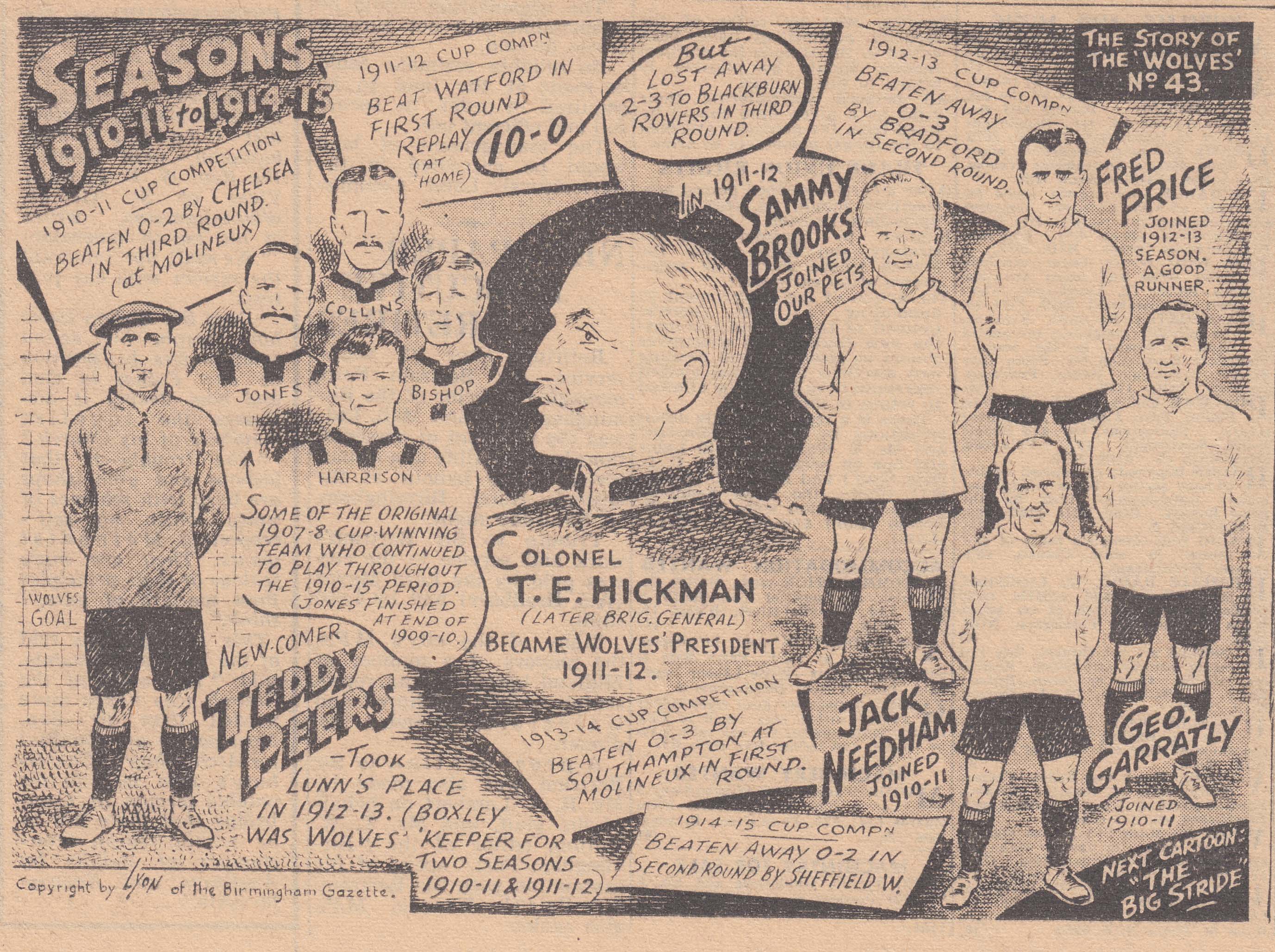
After Shelton passed away, his widow eventually married Wolves player Jack Needham who also served in the war. Needham had a very good goalscoring record, with 61 goals in 202 appearances.
Other Wolves Players
All three of the men mentioned above had finished their playing careers before the outbreak of the First World War, but they were not the only former or serving Wolves players or staff to answer the call of duty.
Among those who served were Freddy Price, who played for Wolves between 1912 and 1920 and made 124 appearances, Thomas Dowdeswell, who was on Wolves' books between 1914 and 1917 but never made a first-team appearance, George Garratly, who made 232 appearances for Wolves between 1909 and 1920, and Albert Groves, who played 217 times for the club during the same period. After his time at Wolves, Groves also played for Walsall before later becoming the landlord of the Hope and Anchor pub in Willenhall.
Others were also Jack Crabtree who made 11 appearances between 1912 and 1915, Ted Juggins who made 22 appearances between 1904 and 1907, Archie Needham who made 35 appearances between 1910 and 1911 and Albert Pemble who made two appearances between 1909 and 1910. There was also keeper Tommy Lunn who made 142 approaches between 1904 and 1911.
Jack Davies, Buckley’s long-serving trainer and a loyal servant of Wolves from 1920 until 1978, was a member of the 4th Denbighshire Battalion of the Royal Welch Fusiliers. Serving as a frontline medic, Davies occupied one of the most dangerous roles on the battlefield. As one of the first men to tend to the fallen, he witnessed the horrific realities of war at close quarters, once even saving a soldiers life using nothing but an elastic band. It was a position that demanded exceptional courage, selflessness and dedication.
Davies also witnessed the famous ‘Christmas Truce’ in 1914 when the British and German troops met in No Man’s Land to play football and exchange gifts.
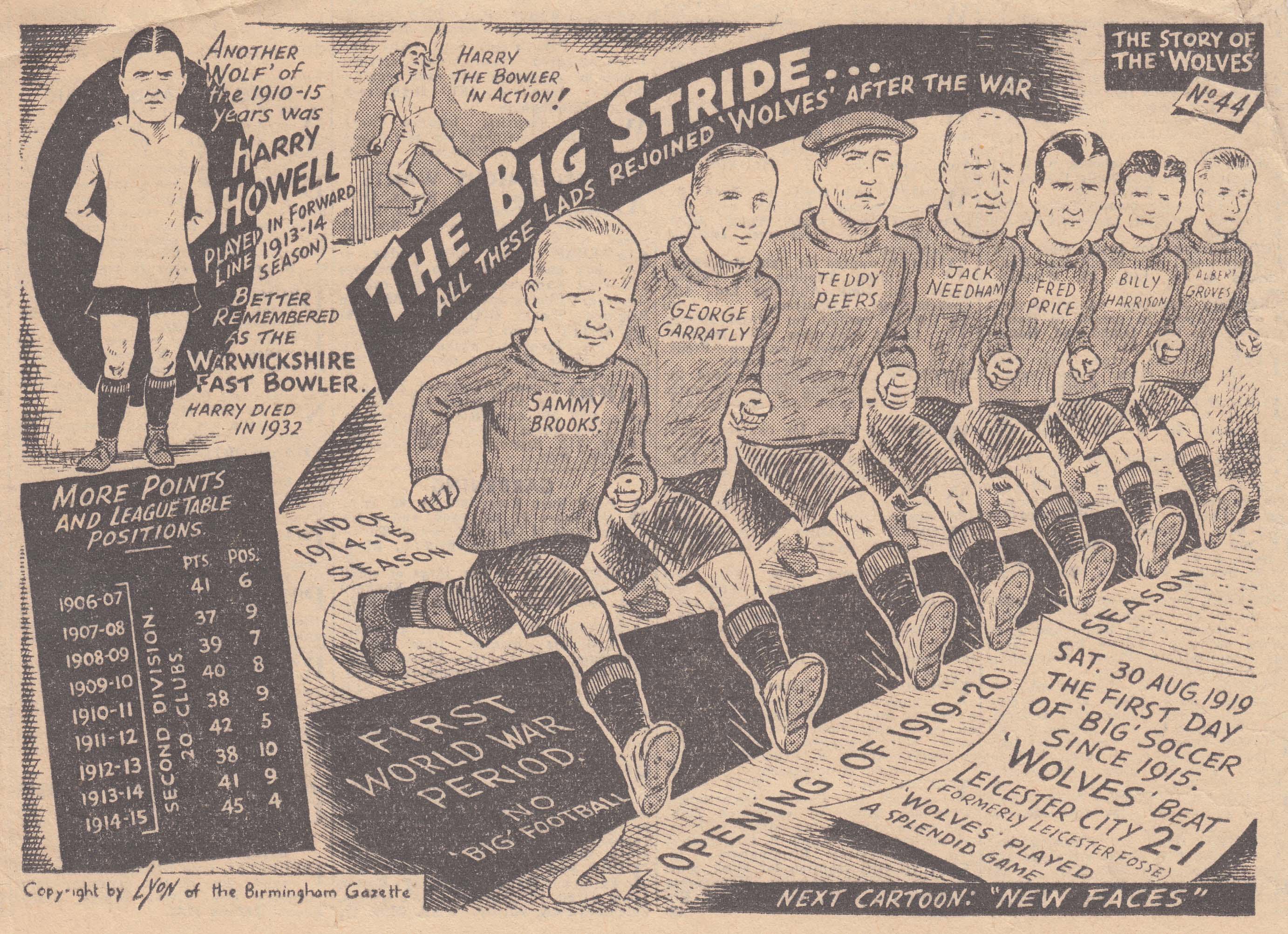
Football during the First World War
There are no formal records left of Wolves games in the First World War, but thanks to Dale Boswell’s and other research we do have some more information of games at Molineux during this period.
On 27th December 1915, there was a charity football match held at Molineux between a Bishop’s XI and a Groves’ XI.
Alf Bishop was a half-back who played for Wolves between 1906 and 1920 and served in the war. Every single player in this team played for Wolves in 1914/15 with the exception of Reverend Kenneth Hunt, who was an ex-player by this point.
The other XI was assembled by our centre half Albert Groves and consisted of Groves himself and players from other clubs. There were four West Brom players, and one each from Aston Villa, Walsall, Stourbridge, Sunderland, Manchester United and Hull City. The crowd was 15 000, and Bishop’s side won 3–1. The proceeds of the game went to various charities.
Wolves also played Birmingham in two friendlies during this period. In April 1916, Wolves beat Blues 5-3 at St Andrews, before drawing 2-2 at Molineux that same month.
On Saturday 23rd December 1916, Molineux hosted another charity match, this time between Reverend Hunt’s XI and Alf Bishop’s XI. Bishop's side bore a strong resemblance to the team that had taken part the previous year, with many familiar Wolves names featuring once again.
Charity football continued to play an important role throughout the war. On Tuesday 25th April 1916, Wolves faced a Billy Halligan XI in a match held to raise funds for the Wolverhampton and Staffordshire Hospital, with proceeds going towards the vital work carried out by the institution during wartime.
A year later, on Boxing Day 1917, Molineux staged another fundraising fixture when Wolves’ 1908 FA Cup-winning side took on an Army XI. The match was organised in aid of the Staffordshire Regiment, helping to support those serving on the front line.
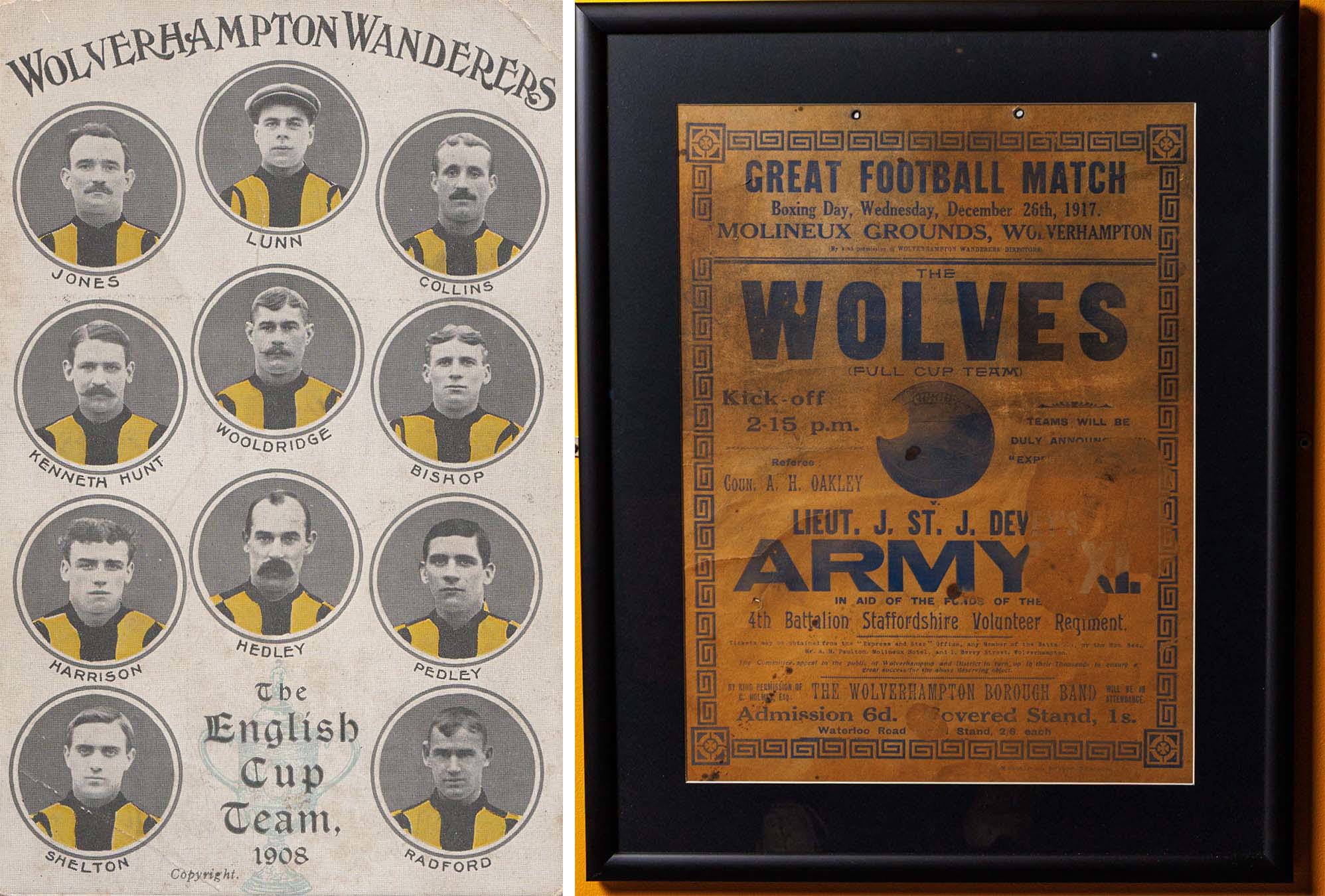
We have a poster in the Wolves Museum showing this game, which was at one time on display in the Wanderer pub. In March and April 1918, Wolves also played a West Brom and Aston Villa XI away and at home in friendlies. Wolved won away 3-1 but lost at home 4-3. We had also played a combined Albion and Villa team in April 1917 and won 9-2.
Football did not immediately return to normal following the end of the First World War and during the 1918/19 season, Wolves competed in a small regional league alongside West Bromwich Albion, Derby County and Aston Villa. After playing six matches, Wolves finished third in the four-team competition.
Despite the war having ended, football continued to support charitable causes. On Boxing Day 1918, Molineux once again hosted a charity fixture, continuing the club's efforts to raise funds and bring the local community together during a period of recovery and rebuilding.
Interestingly, we believe Wolves' kit colours had changed slightly from 1914 onwards. This was not a stylistic decision but a consequence of wartime shortages. At the time, many of the dyes used by the British textile industry were imported from Germany, which had dominated the production of synthetic dyes before the war.
We’ll delve into Wolves during the Second World War as well as Major Frank Buckley’s legacy over the coming weeks.
Wolves historian Pete Crump’s weekly articles reflecting on a range of topics from the club’s proud past will be available throughout the 150th anniversary season on wolves.co.uk.


