'Out of Darkness Cometh Light: The story of Wolves' home kit' by club historian, Pete Crump
The famous gold and black is now iconic across the footballing world, and we mark the start of our 150th campaign by looking at how our strip has developed during the past 150 years.
The first part of the celebration was the release of the wonderful 150th kit by SUDU. The home shirt itself sees the return of the Wolverhampton city coat of arms which is back on the Wolves shirt for the first time in 30 years. It last appeared on the shirt from 1993 to 1996 and is back by popular demand and at a poignant time in our history.
The Wolves badge, which we will also look into during this season, will remain and will always be our official branding, but it is nice to see our city identity return for this special 150th year.
The home shirt this season is so traditional, with the gold also returning to a more favourable shade. We are also excited by the away and third shirts which are on the way soon, and we are confident you will love them just as much.
But we start by looking at how our home shirt has developed over the past 150 years, as there has been plenty of changes along the way.
Blue and white to red and white
Back when we were founded at St Luke’s Church School and when we played our first game against Stafford Road reserves on the 13th January 1877, it appears Wolves were wearing a blue and white hooped shirt.
Percy Young talks about this in his history books that were written in 1959 and 1977. This is also depicted on one of the famous cartoons that were produced by Lyon for the Birmingham Gazette, which were featured in the official matchday programmes during the 2023/24 and 2024/25 seasons.
Cartoon number 57 of the series states that Mrs Hill knitted such jerseys and that the designs were blue and white hoops. Mrs Hill’s husband, Fergus, was an early official of the club and her son Jimmy played for us too. Fergus was a very important figure in Wolves’ history.
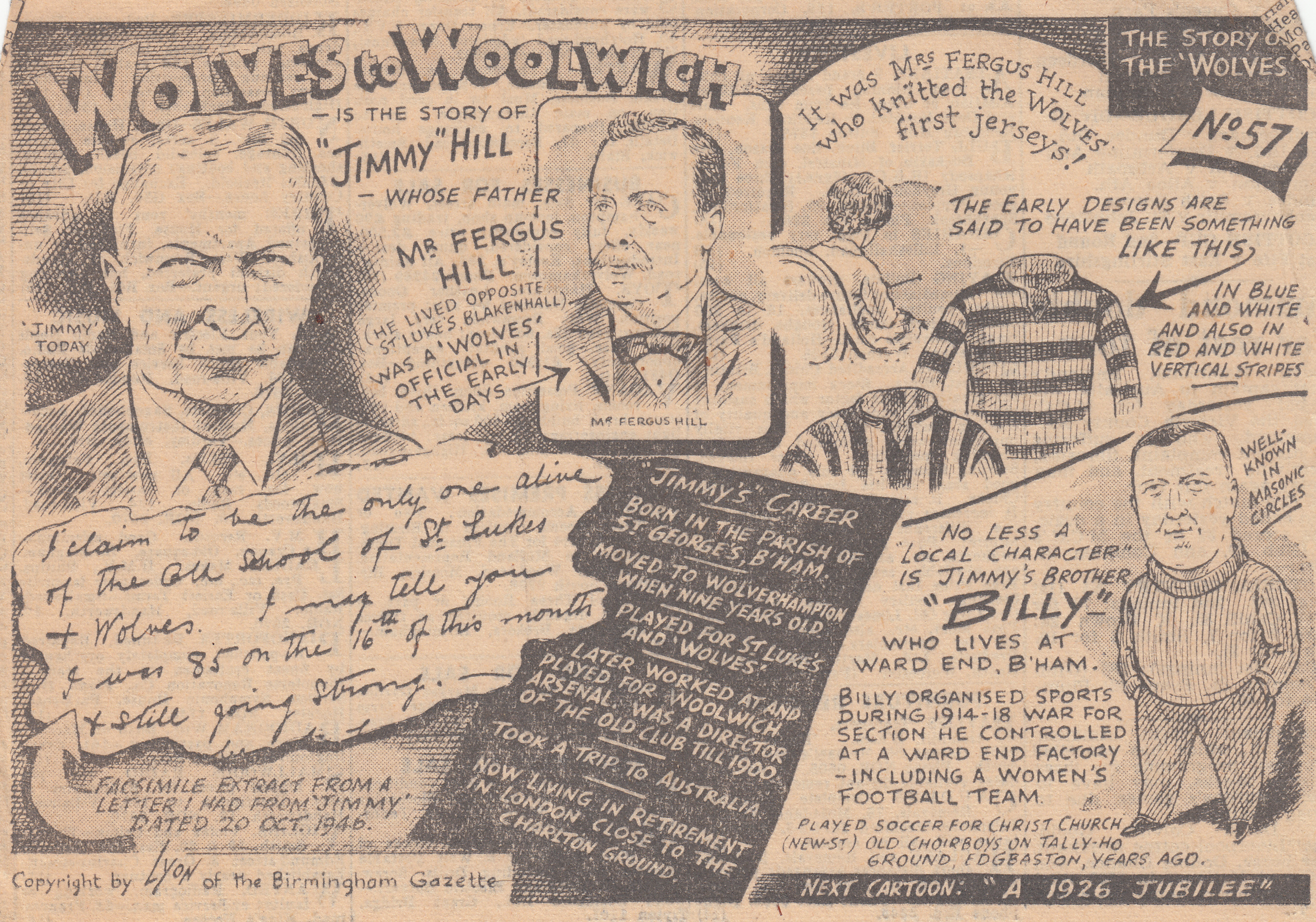
From 1877 to 1883 we looked more like Queens Park Rangers, or even more so Reading, with the darker bottoms and socks that are depicted. In 1883, there was a change to red and white vertical stripes. This is also depicted in the same cartoon.
We also have – albeit in black and white – pictorial evidence showing Wolves in red and white vertical stripes. The 1884 Wrekin Cup winners, the 1888/89 squad picture and others around this time show Wolves in the red and white stripes with dark bottoms and dark socks. This makes Wolves look more like Sunderland, Brentford, Sheffield United and others.
However, things for Wolves began to change after a famous away game at Sunderland on 15th September 1890. Wolves travelled to Roker Park for the third league game of the season, which was the first ever meeting between the two teams in a competitive fixture.
Legend states both teams appeared in exactly the same strip. The referee was not happy with this and ordered the visiting Wolves team back to the changing room and told them to dress in their white travel/dress shirts. We say this was potentially the game, but we had played Sunderland previously in a friendly.
It also poses the question as to why this clash was not spotted with Stoke, who were a founder member of the football league, alongside us. However, our shorts and socks were different to that of Stoke, and with less colours available in those days, a different colour of shorts and socks would probably have sufficed.
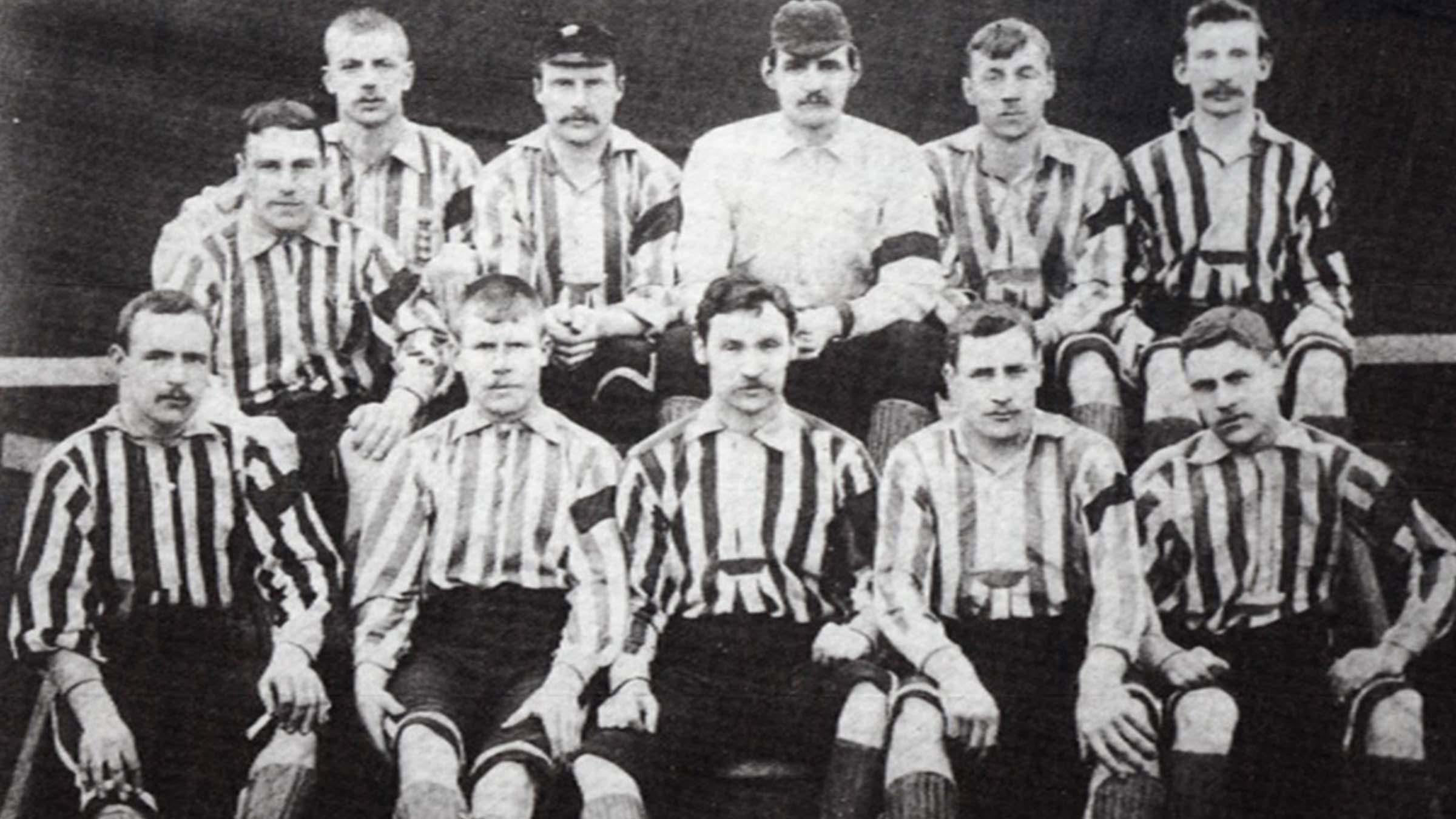
As is correctly pointed out in the late Steve Plant’s excellent ‘They Wore The Shirt’ book, no reason to why Wolves went from looking like Reading to Sunderland was ever recorded – as far as we are aware. A tale that is also told in the same book, and was told a lot by our former club historian, the late Patrick Quirke, Wolves during the red and white era adopted a nickname of the ‘Dirty Pinks’. This was due to the red dye in the shirt fading and bleeding into the white when they were washed, thus changing the shade of the shirt.
As far as we are aware, there is sadly no surviving blue and white or red and white Wolves shirt from this era. A lead on these shirts came to the Wolves Museum team around 2018 from the family members of Charlie Mason, our first ever England International, and we believe that he may well have been buried in a red and white striped Wolves shirt in 1941.
Out of Darkness Cometh Light
Wolverhampton had been a municipal borough since 1848 and were a county borough in 1888. The colours old gold and black are inspired by the now city motto – out of darkness cometh light. This motto came about in 1888 with the then towns coat of arms and we believe the famous club colours are representative of this. Black represents darkness and gold represents light – after darkness (black) always comes light (gold).
We did start wearing a variation of gold and black in 1889 when we began playing at Molineux. However, the team then reverted back to red and white before the Sunderland game. But the first gold and black shirt was not what we are used to today. It was a diagonal design of half gold and half black with black shorts and socks.
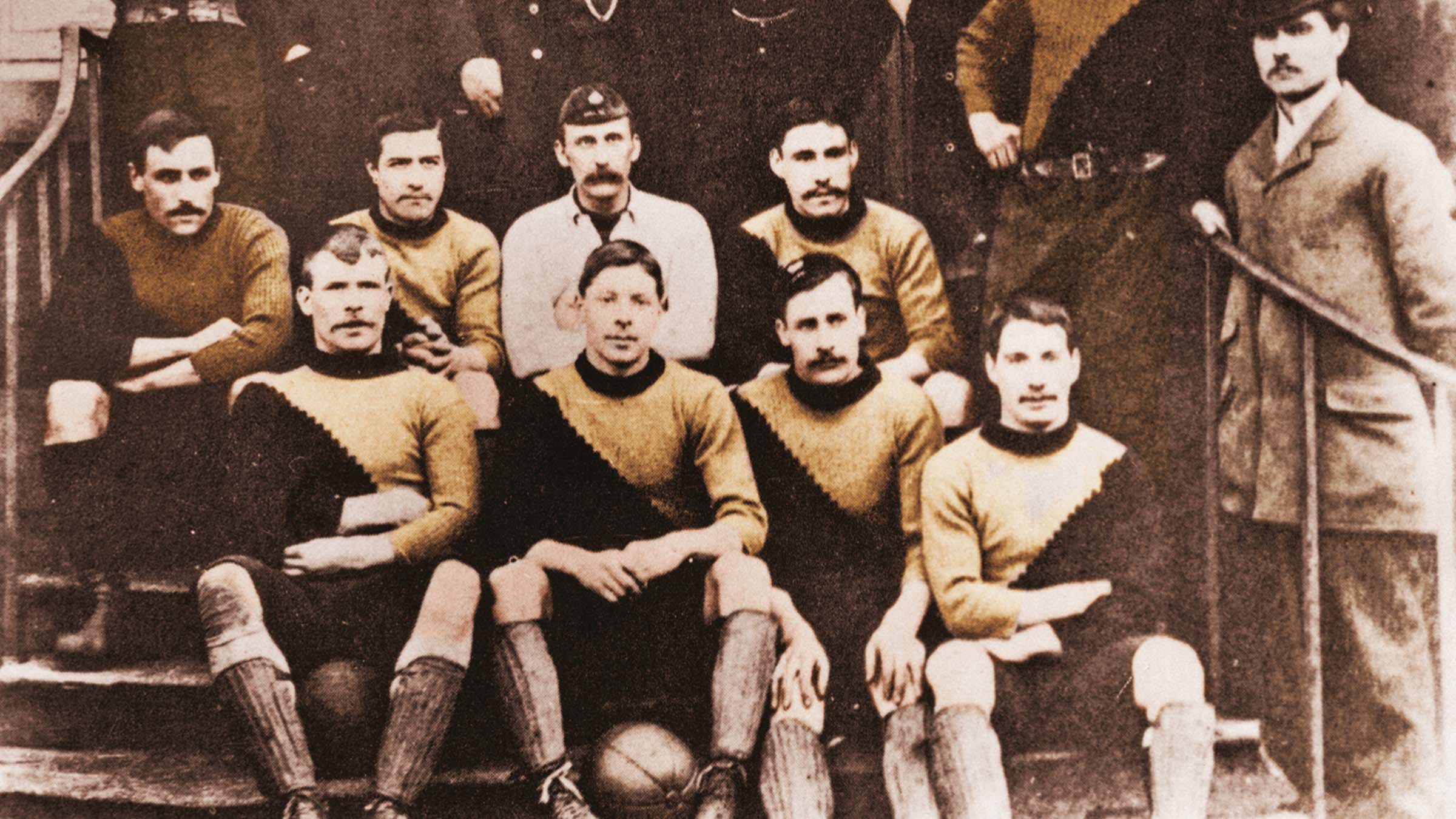
The Sunderland game, we believe, caused a change to the Football League regulations. This was also the first time a Football League handbook was produced with such details.
According to historicalkits.com, Wolves’ new colours were to be blue and orange, and this was reported in The Burnley Express. However, by the 1891/92 season, quartered old gold and black shirts, and black shorts were registered and this was reported in the Preston Herald.
Another rule put in place was a team also had to have a set of white change shirts. This was introduced in 1892. It wasn’t always the away team that changed, and often it was the home side that wore white, but Wolves had already accidentally adopted white as our change shirt after the Sunderland game.
By 1891, Wolves would play in gold and black or old gold and black, and that has been the case ever since.
The gold and black army
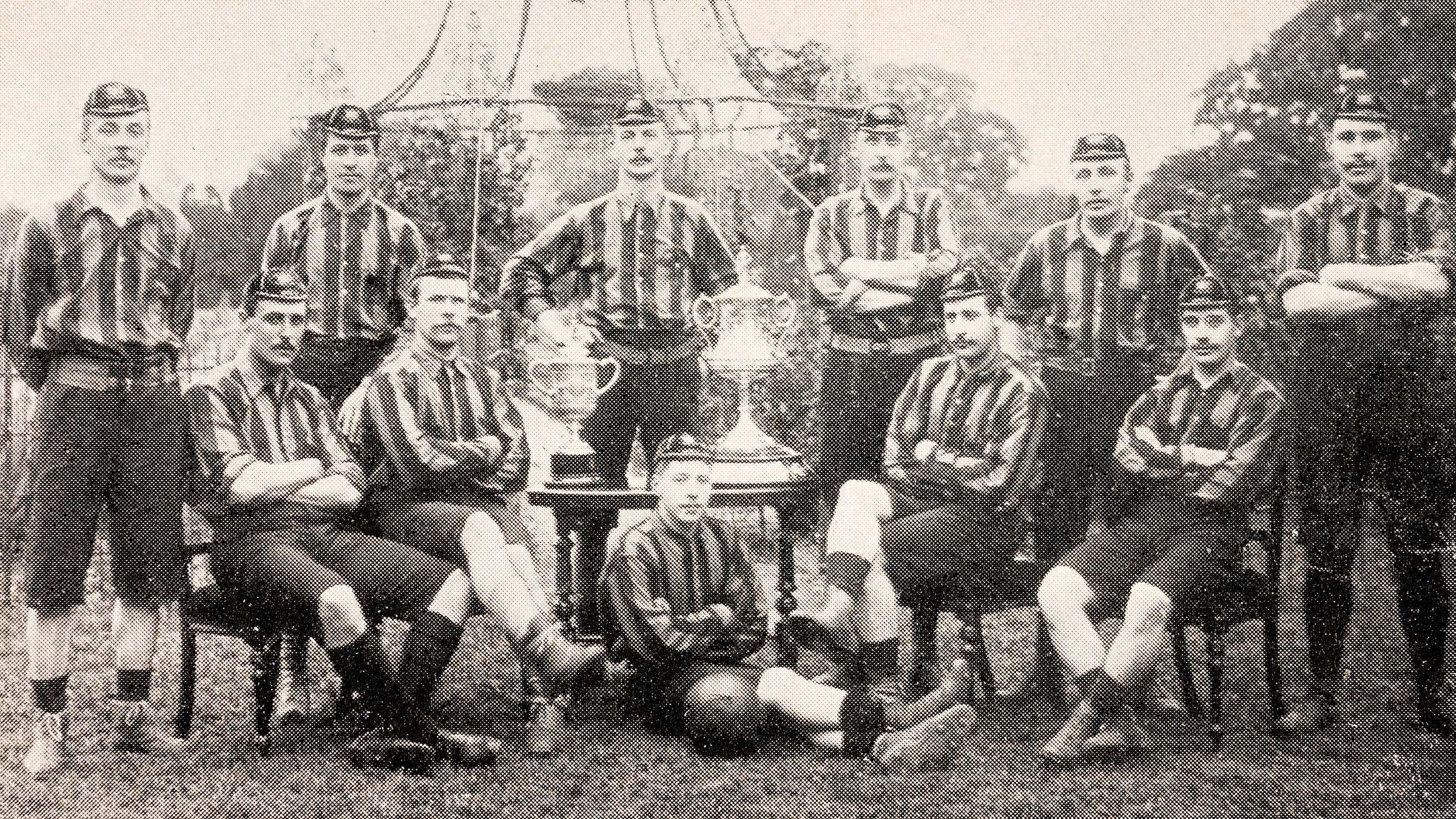
The early gold and black shirts show a plain design with white shorts and black socks and a diagonal design, similar to that of 1889. But by 1892, Wolves had gone to gold and black stripes and these would last until 1922 in various variations – thicker stripes, thinner stripes and at times slightly lighter gold too.
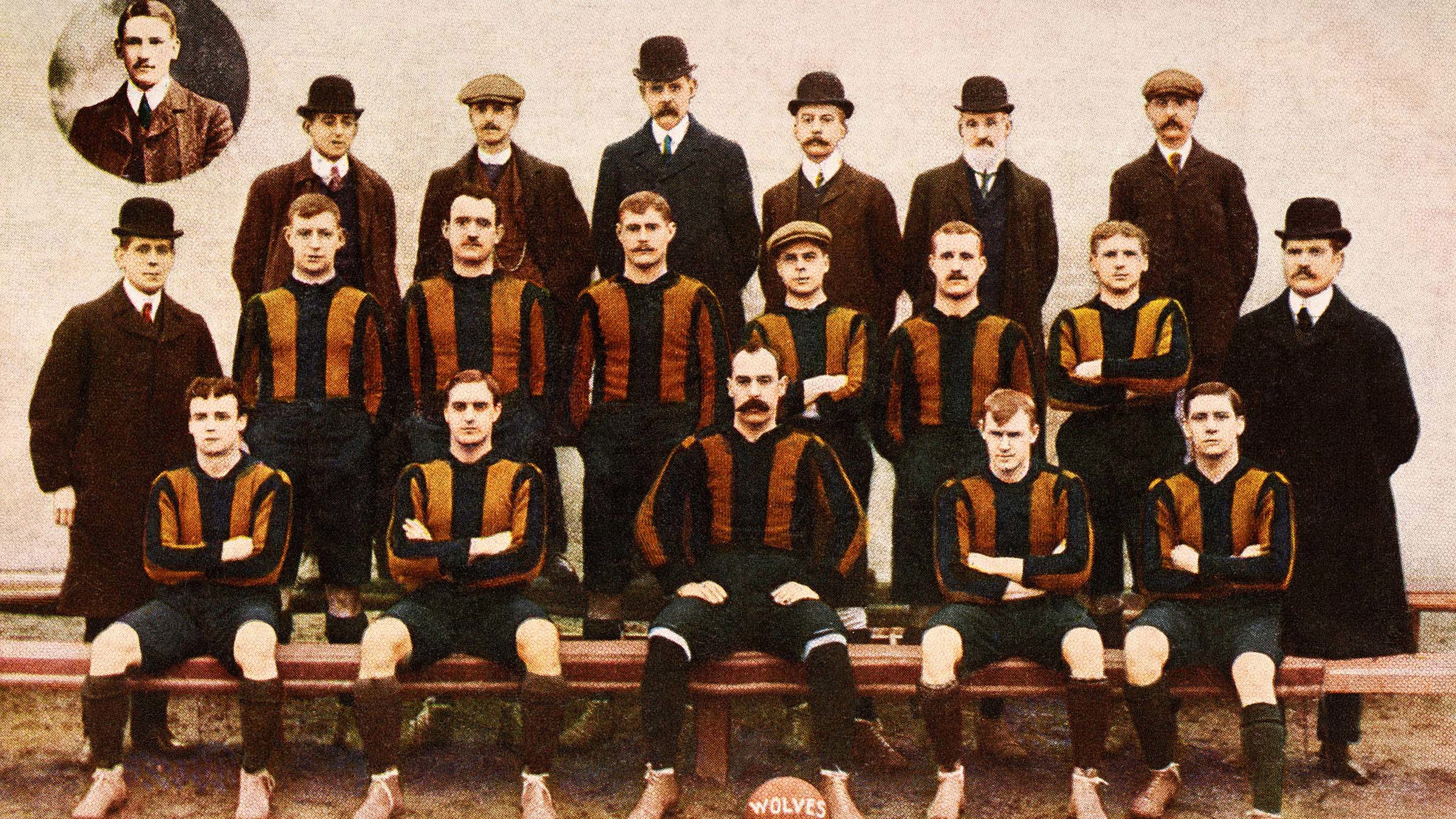
Pictures of Wolves winning the FA Cup in 1908 show the team in gold and black stripes, while the shorts and socks during this era are consistently black.
In the 1921 FA Cup Final, we see the arrival of a badge on the Wolves shirt for the first time. In the Victorian era, some footballers would sow their international badge onto their shirts, however, the first so-called Wolves badge appeared when the then-town crest with ‘out of darkness cometh light’ appeared in the 1921 FA Cup Final at Stamford Bridge.
Wolves can be clearly seen on footage running out in this shirt at the start of the game, however, the weather was so treacherous and wet that day causing the shirts to be changed at half time, with the league shirt being put back on. We have Tancy Leas shirt available to view inside the Wolves Museum from this game.
The 1921 FA Cup shirt with the coat of arms was also interestingly made by Bukta. Bukta can make claim to being one of the oldest shirt manufacturers in the world. They were founded in 1879 and made the Nottingham Forest shirt as early as 1884. They would make a return to Wolves in 1990, although we are not sure how many shirts they made for Wolves around this time, as unfortunately not many have survived.
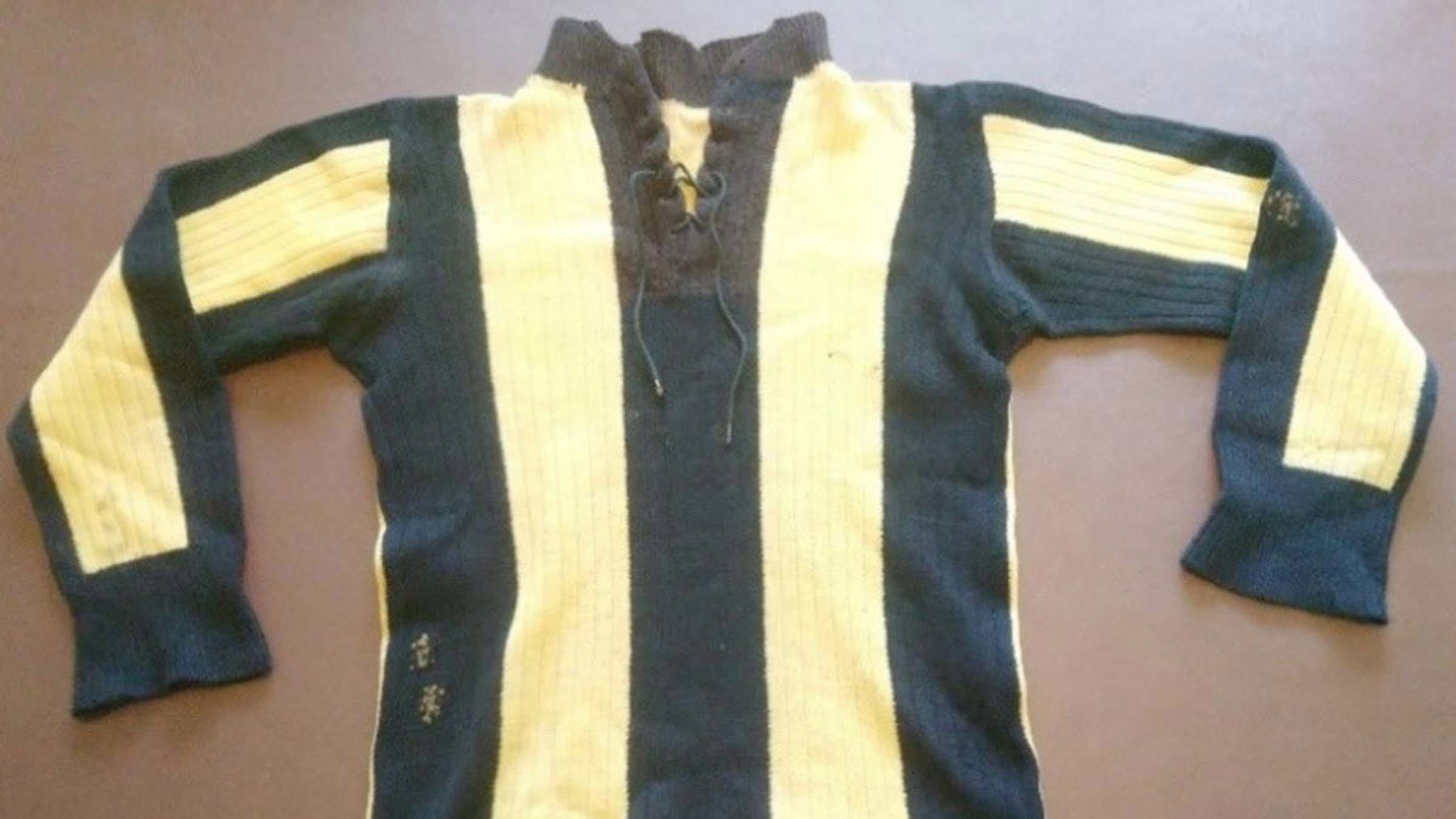
In 1923 we see another change to the shirt. The stripes are replaced with a ‘V’ design. This shirt was worn in the 1923/24 Third Division North winning season, and we have Bill Caddick’s shirt from that season on display.
There was also a change to the shorts that year as they were white. There was also a brief return to stripes the following season, before the 1920s saw gold shirts, white shirts and black socks. In 1927/28, the shirts utilised a thin pin-striped design, while the white shorts were also consistent in the mid-to-late 1920s.
The 1930s would see the Wolves shirt change beyond recognition and it could be argued that this era was when we see it move towards what it looks, or has looked like, in all of our memories.
Photos show in 1930 the first evidence of Wolves wearing all gold at home in 1930-31 and as a home alternative throughout the decade. These strips also show the first example of gold socks and move away from black socks.
We’ll delve into that era, and future generations of the Wolves home kit, over the coming weeks.
Wolves historian Pete Crump’s weekly articles reflecting on a range of topics from the club’s proud past will be available throughout the 150th anniversary season on wolves.co.uk.


